Why Your Progressive Overload Plateaus (And How to Restart It)
By Mofilo Team
Published 12 min read
Key Takeaways
- Early strength gains come mostly from your brain learning the movement, not muscle tissue growing. Once your nervous system maxes out its efficiency, progress naturally slows down.
- A true plateau means performance is flat for weeks despite good recovery, while a false plateau is just accumulated fatigue masking your strength. Taking a low-volume week often clears the fatigue so you can lift heavier again.
- Adding reps or improving your technique counts as progress just as much as adding weight to the bar. Lifters who only chase heavier weights usually stall faster than those who vary their targets.
- Drop one working set from every exercise for a week when your main lifts stop moving. This creates the recovery buffer your muscles need to finish adapting to the previous month of training.
For the first six months, the math is intoxicating. You walk into the gym, put five more pounds on the bar than last week, and you lift it. You do this every Tuesday.
You start projecting the math forward, calculating exactly what you will be lifting by December. Then, usually around month eight, the bar stops moving. You try again the next week, and you miss the rep again. You try a third time, maybe hyping yourself up more, and you fail earlier in the set.
The immediate reaction is to assume you are doing something wrong. You wonder if you need a new program, a different supplement, or if you just lack the genetics for this. That reaction is normal, but it misreads what is actually happening under the hood.
What you are experiencing is not a failure of your work ethic. It is the transition from the beginner phase to the intermediate phase of lifting. Progressive overload is a simple concept on paper, but it stops being a straight line the moment your nervous system figures out how to efficiently fire your muscle fibers.
From that point on, forcing the weight up every single week stops working. To restart the process, you have to change how you measure progress. You also have to manage the fatigue you are accumulating.
Why the Easy Phase Ends
When you first start lifting, you get stronger very quickly without adding much actual muscle tissue. This happens because your nervous system is learning how to coordinate the movement. Your brain gets better at recruiting the muscle fibers you already have, and you stop wasting energy on poor balance.
This neurological adaptation is responsible for almost all the strength you build in your first few months of training (Gabriel et al., Sports Med 2006). It feels like progressive overload, but it is really just skill acquisition. It is like learning to ride a bike. The muscle was always there, but the coordination was missing.
Eventually, your nervous system becomes highly efficient at the squat, the bench press, or the deadlift. Once you max out that efficiency, the only way to lift more weight is to actually build more contractile tissue. Muscle tissue grows much slower than nervous system efficiency improves.
This is the moment most people hit their first true plateau. They expect the neurological rate of progress to continue forever. When it defaults to the biological rate of muscle growth, it feels like hitting a wall.
You have not broken your program. You have just graduated to the reality of how long it takes to build a stronger frame (Ji et al., Eur J Appl Physiol 2025). If you are asking why am i not making progress even with a workout plan, this timeline mismatch is usually the primary culprit. Adapting your expectations to this new reality is the first step in moving forward.
How Accumulated Fatigue Hides Your Strength
The most common reason your numbers stop going up is not that you stopped getting stronger. It is that you are too tired to demonstrate the strength you have built.
Every time you lift, you generate two things. You generate fitness, and you generate fatigue. Fitness persists for a long time.
Fatigue dissipates relatively quickly, but it masks your fitness while it is present. When you train hard for several weeks in a row, fatigue accumulates faster than it can clear. By week five or six of a challenging routine, your baseline level of exhaustion is high enough that it actively suppresses your peak strength (Shepley et al., J Appl Physiol 1992).
You might actually have the muscle capacity to lift ten more pounds. Your central nervous system is just too blunted by accumulated stress to recruit those fibers effectively.
This is where lifters usually make a critical error. They see the plateau, assume they are not doing enough, and add more volume. Adding more volume to a highly fatigued system just drives the fatigue higher. It buries your strength even deeper.
If your sleep is adequate and your calories are maintained, a sudden drop in performance after a month of good progress is almost always a fatigue issue. The strength is there. You just cannot see it through the exhaustion. Learning the beginner vs advanced workout structure differences often centers around managing this specific fatigue variable.

Your work is still building.
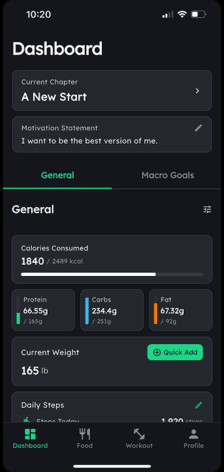
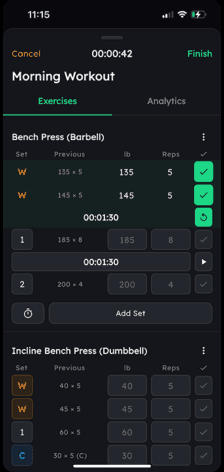
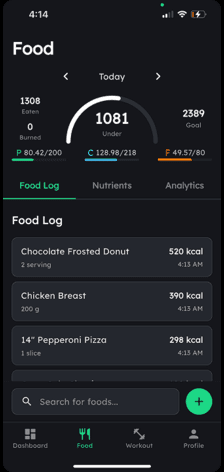
The heavy plates stalled. Mofilo tracks your rep history so you can climb the range and prove you are advancing.
No commitment · Cancel anytime
The Volume Taper
When fatigue is masking your fitness, trying harder will not fix the math. The move that actually restarts progressive overload is a volume taper.
Most lifters know this as a deload, but framing it as a taper is more accurate. You do not need to sit on the couch for a week. You just need to drop the total workload enough to let the accumulated fatigue clear out of your system. When the fatigue drops, the fitness you built over the last month is finally unmasked.
The simplest way to execute a taper is to keep the weight on the bar exactly the same, but cut your total sets in half for one week (Bosquet et al., Med Sci Sports Exerc 2007). If you normally do four sets of eight at 135 pounds, do two sets of eight at 135 pounds. You maintain the intensity so your body remembers how heavy the weight feels, but you drastically reduce the stress.
Most lifters resist doing this because it feels like stepping backward. Taking an intentional light week is psychologically difficult when you are desperate to see the numbers go up.
Biological adaptation requires recovery. Taking a taper week every four to six weeks is standard practice in almost every successful strength program for a reason (Kahraman et al., Shield Res J Phys Educ Sports Sci 2026). When you return to your normal volume the following week, the plateau is often gone.
Why Form Breakdown Is Not Real Progress
Sometimes, the desire to maintain the illusion of progress leads lifters to cheat the movement. You add five pounds to the bar, but your squat does not go quite as deep. You add weight to your barbell row, but you use more momentum from your hips to get the bar to your chest.
This is a false progressive overload. You are moving more weight, but the target muscle is not doing more work. You are just distributing the load to other muscle groups or using physics to bypass the hardest part of the range of motion. Bouncing a bench press off your chest uses the ribcage as a trampoline, removing the chest muscles from the exact portion of the lift that stimulates growth the most.
Your body adapts to tension, not the number written on the plates. If you shorten your range of motion to lift a heavier weight, you often reduce the mechanical tension on the muscle you are trying to grow (Valamatos et al., Eur J Appl Physiol 2018). This leaves you with higher systemic fatigue, a greater risk of joint aggravation, and less actual muscle growth.
A true plateau is a flatline in performance with strict, identical technique. If you have to ask how do i know if im squatting deep enough, and the answer is shallower than last month, you have not actually gotten stronger. Standardizing your technique is the only way to know if your program is working (Plotkin et al., PeerJ 2022).
When to Change Reps Instead of Weight
The insistence on adding weight every single week is the most common trap for intermediate lifters. Once you are past the beginner phase, adding five pounds to an upper body lift might represent a five or ten percent jump in total load. Your body simply does not build muscle fast enough to support a ten percent strength increase in seven days.
Instead of treating weight as the only variable, use a double progression model. Pick a rep range, such as eight to twelve reps. You keep the same weight on the bar until you can hit the top of that range for all your working sets.
If you lift 100 pounds for three sets of eight this week, your goal next week is to lift 100 pounds for three sets of nine. You stay at 100 pounds until you can achieve three sets of twelve. Only then do you add weight, drop back down to eight reps, and start the process over.
This method allows you to apply progressive overload in increments your body can actually recover from (Robinson et al., Sports Med 2024). Adding one rep to a set is a much smaller jump in demand than adding five pounds to the bar. If your gym has fractional plates, micro-loading with one-pound jumps is another alternative, but double progression is more accessible.
It gives your joints and tissues time to adapt to the load. It also keeps you progressing without slamming into a wall every three weeks. Keeping accurate records of these small rep changes is exactly how to use a workout log to actually get stronger instead of just spinning your wheels.
Know exactly what to beat today.
Your routine structure is ready before you walk in. Check last week's rep count, and fight for one more.
No commitment · Cancel anytime
Why Under-Eating Freezes Your Progress
You cannot build a house without bricks, and you cannot build muscle without raw materials. At a certain point, a progressive overload plateau is just a calorie problem disguised as a training problem.
When you are a beginner, you can often build strength and muscle while losing body fat or eating at maintenance. Your body is highly sensitive to the novel stimulus of lifting, and it will repartition energy to adapt (Ji et al., Eur J Appl Physiol 2025). As you become more trained, that sensitivity drops.
To continue adding tissue, you need a slight energy surplus to fund the expensive process of building new muscle (Slater et al., Front Nutr 2019). If your weight on the scale has not changed in three months and your lifts are stuck, you have likely reached the limit of what your current body mass can move.
This does not mean you need to eat everything in sight. A small surplus of two to three hundred calories a day is usually enough to restart the engine without adding excessive body fat. If you are struggling with how to eat more food when youre bulking but not hungry, adding liquid calories or dense fats can bridge the gap.
Sometimes, the only difference between a plateau and a personal record is an extra bowl of oatmeal a day. Even figuring out do i still need to count calories if i workout a lot comes down to making sure you are not accidentally under-eating on heavy training days.
Frequently Asked Questions
How long should I expect a strength stall to last?
A true plateau is usually defined as two to three consecutive weeks with no improvement in reps, weight, or technique. Day-to-day fluctuations are normal. If you have a bad workout on Tuesday, you are not plateaued.
You just had a bad day. If your numbers have not moved in a month despite consistent training, you likely need to adjust your volume, your recovery, or your calorie intake.
Do I still need to track every workout if I am stuck?
Yes, and it becomes even more important. When progress slows down, the increments of improvement get smaller. You might only add one rep to your third set of an exercise.
If you are relying on memory, you will miss these small victories and assume you are failing. Deciding is it better to log every workout or just the hard ones usually leans toward logging everything. It gives you the objective data you need to know if a taper or a diet change actually worked.
Can I push through a plateau by just trying harder?
Occasionally, a lack of effort is the issue, but most lifters dealing with a plateau are already training very hard. Pushing a highly fatigued body even harder usually just degrades your technique and increases your risk of injury. If you have been grinding near failure for six weeks, trying harder is often the opposite of what your body needs to recover and adapt.
Does a calorie deficit automatically cause a strength stall?
Not automatically, but it makes it much more likely. When you are losing weight, your body has fewer resources to repair tissue. Most people will eventually see their strength level off or slightly decrease during a prolonged cut.
This is a normal physiological response to restricted energy, not a sign that your training program is broken. If you are weighing a slow cut vs fast cut, a slower pace often preserves more of your top-end strength.
Are there specific exercises that help restart progress?
Swapping an exercise can help if you have been doing the exact same movement for months. Changing from a barbell bench press to a dumbbell press alters the recruitment pattern slightly and can spur new adaptation. However, constantly changing exercises every time things get hard prevents you from ever mastering a movement enough to truly overload it. Stick to a movement for at least eight weeks before deciding it is the problem.
Conclusion
What you do in the gym is the stimulus, but the adaptation happens when you leave. A plateau is rarely a sign that you need a more complicated routine or a punishing new intensity technique. Most of the time, it is simply your body requesting better management of the stress you are applying.
When the bar stops moving, the most productive response is to step back and evaluate the variables that actually drive progress. Check your technique to ensure you are not cheating the range of motion. Give your body a temporary reduction in volume to clear out the accumulated fatigue. Make sure you are eating enough to fund the tissue growth you are demanding.
Your body adapts to what you consistently give it. When you stop treating every workout as a test of your limits and start treating it as a managed dose of stress, the plateaus become shorter. You walk back into the gym, chalk your hands, and the bar finally moves again.
All content and media on Mofilo is created and published for informational purposes only. It is not intended to be a substitute for professional medical advice, diagnosis, or treatment. Always seek the advice of your physician or other qualified health provider with any questions you may have regarding a medical condition, including but not limited to eating disorders, nutritional deficiencies, injuries, or any other health concerns. If you think you may have a medical emergency or are experiencing symptoms of any health condition, call your doctor or emergency services immediately.
Read more blogs
Weighted Dips vs Close Grip Bench
What You'll Learn in 10 Min
- •Why dips have a greater range of motion for growth
- •How to program both for maximum strength and size
- •Which exercise is safer for your shoulder joints
How to Eat Out and Still Hit Your Macros
What You'll Learn in 9 Min
- •How to 'bank' calories before eating out
- •The 'Deconstructed Meal' ordering method
- •How to estimate macros using your hand
Is Junk Volume for Biceps Killing My Gains
What You'll Learn in 10 Min
- •Why 10-14 weekly sets is the bicep growth sweet spot
- •The 3 signs you are doing junk volume right now
- •How to track reps and weight to guarantee bicep growth