How to Eat Out and Still Hit Your Macros

We hope you enjoy reading this blog post. Ready to upgrade your body? Try Mofilo Free
By Mofilo Team
Published
Trying to eat out while tracking your macros can feel like a choice between having a social life and hitting your fitness goals. It’s a common point of failure that leaves you feeling guilty or isolated. This guide gives you a simple, repeatable system that works.
Key Takeaways
- To hit your macros when eating out, bank 40-50% of your daily calories and carbs specifically for the restaurant meal.
- Order using the “Deconstructed Meal” method: choose a simple protein, a plain carb, and vegetables separately, with all sauces on the side.
- Use your palm to estimate protein: a palm-sized portion of meat or fish is about 4-5 ounces, which provides 25-35 grams of protein.
- When logging the meal, always double your estimate for fats. Restaurants use far more butter and oil than you would at home, often adding 200-400 hidden calories.
- Before you go, check the restaurant's website for a nutrition PDF. Most large chains provide this, removing all guesswork.
- If you go over your targets, do not compensate by skipping your next meal. Just get back on your plan immediately.
Why Guessing Your Macros at Restaurants Fails
Knowing how to eat out and still hit your macros feels impossible because the entire environment is designed to make you fail. You either order a sad, dry chicken breast with steamed broccoli or you give in, promise to “start again tomorrow,” and wake up with regret. The real problem isn't your willpower; it's the lack of a system.
Restaurant food is loaded with hidden calories, primarily from fat. That “healthy” grilled salmon? It was likely cooked in 3-4 tablespoons of butter or oil, adding 360-480 calories you never accounted for. The vinaigrette on your salad can easily pack 300 calories. These aren't edge cases; this is the industry standard. They prioritize taste over macros.
This is why just “ordering something healthy” is a losing strategy. Words like “fresh,” “natural,” or “lightly sautéed” on a menu are marketing terms, not nutritional information. A turkey burger can have more calories than a beef burger if it's mixed with high-fat binders and served on a brioche bun with aioli.
You end up in a frustrating cycle. You work hard all week, meticulously tracking every gram of food. Then, one Friday night dinner seems to undo it all. It makes you feel like progress is fragile and that you can't have a normal life. This isn't true. You just need a better plan than guessing.

Stop guessing your restaurant macros.
Track your food. Know you hit your numbers, even when you eat out.
No commitment · Cancel anytime
The Pre-Meal Game Plan: How to Prepare for Success
Success happens before you even sit down at the table. Walking into a restaurant without a plan is like walking into the gym without a workout program. You'll wander around, make poor choices, and leave unsatisfied. Here’s how to set yourself up to win.
Step 1: Bank Your Calories and Carbs
This is the most critical step. On the day you plan to eat out, you must intentionally eat lighter for your other meals. The goal is to create a large calorie and macro “budget” for your restaurant meal.
Aim to save 40-50% of your total daily calories. For example, if your daily target is 2,200 calories, you should have a budget of 880-1,100 calories for the restaurant. Do this by making your breakfast and lunch primarily from lean protein and non-starchy vegetables. A protein shake for breakfast and a large chicken salad (with light dressing) for lunch is a perfect setup.
This strategy keeps your protein intake high and your calorie/carb intake low, giving you maximum flexibility for dinner.
Step 2: Research the Menu Online
Never go in blind. Almost every restaurant, from fast-food chains to local bistros, posts its menu online. Your mission is to review it before you go.
If it’s a large chain (like The Cheesecake Factory, Applebee's, or Chipotle), they are legally required in many places to provide full nutritional information. Find the PDF on their website. Choose your meal, log it in your tracking app in advance, and your work is done. This is the gold standard.
For local restaurants without nutrition info, scan the menu for “deconstructable” meals. Look for simple, single-ingredient items. Identify 2-3 safe options before you arrive so you aren't tempted by overwhelming descriptions when you're hungry.
Step 3: Prioritize Protein Early
Protein is the hardest macro to hit when eating out because portion sizes are inconsistent and often smaller than you need. Ensure you get a head start by front-loading your protein earlier in the day.
If your daily protein target is 160 grams, try to consume 80-100 grams of it before you even leave for the restaurant. This takes the pressure off. Now, even if your dinner protein is a bit lower than expected, you'll still hit your daily goal, which is crucial for preserving muscle mass during a fat loss phase or building it during a surplus.
Your macros. Every day. On track.
No more guessing. Know your numbers and see the results you want.
No commitment · Cancel anytime
The In-Restaurant Strategy: How to Order and Estimate
Once you’re at the restaurant, it’s time to execute. Your goal is to maintain control by ordering intelligently and making educated estimates. This is a skill that gets easier with practice.
The "Deconstructed Meal" Method
This is the single most effective tactic for staying on track. Avoid complex, multi-ingredient dishes like pasta, casseroles, stir-fries, or anything with a mysterious sauce. You have no way of knowing what's in them.
Instead, build your own meal from simple components:
- Choose a Protein: Order a grilled, baked, or broiled protein. Steak, chicken breast, fish fillet, or pork chop are perfect. Specify “no butter or oil” if possible.
- Choose a Carb: Ask for a plain carb source. A baked potato, plain white rice, or a side of sweet potato fries (ask if they are baked or fried) are great options.
- Choose a Vegetable: Order steamed or grilled vegetables. Again, ask for them to be prepared with no butter or oil.
Crucially, always ask for sauces, dressings, and toppings on the side. This puts you in control. You can add one or two spoonfuls for flavor instead of having your meal drowned in hundreds of calories.
How to Estimate Macros Using Your Hand
When there's no nutrition info, your hand is your best estimation tool.
- Protein: A piece of meat or fish the size and thickness of your palm (excluding fingers) is about 4-5 ounces. This equals approximately 25-35 grams of protein.
- Carbohydrates: A cupped handful or a fist-sized portion of rice, pasta, or potatoes is about 1 cup. This equals approximately 40-50 grams of carbs.
- Fats: This is the trickiest. Assume every restaurant meal has at least 1-2 tablespoons of hidden oil or butter. Log a minimum of 15-30 grams of fat *in addition* to the fat naturally in your protein source. If the food looks shiny or greasy, it's probably more.
What About Alcohol?
Alcohol contains 7 calories per gram and can sabotage your progress by lowering your inhibitions. If you choose to drink, keep it simple. A light beer, a glass of wine, or a spirit (vodka, tequila) mixed with a zero-calorie soda are your best bets. A standard drink contains about 100-150 calories. Log these calories as either carbs or fats to account for them in your daily total.
The Post-Meal Mindset: What to Do After You Eat
How you handle the meal mentally is just as important as what you ordered. One meal will never ruin your progress, but a week of guilt-driven bad decisions will.
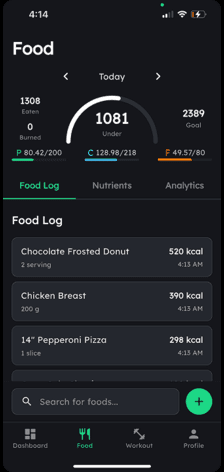
First, log the meal immediately. Don't put it off. Open your tracking app and do your best to estimate. Find a generic entry like “Restaurant Steak Dinner” or “Grilled Chicken Salad” and adjust the quantities based on your hand-portion estimates. It is far better to be approximately right than precisely wrong. An imperfect log is a million times better than no log at all.
Second, accept that your numbers might not be perfect. The goal of eating out is not 100% accuracy. It's about managing the event well enough to keep your momentum. If you hit your protein goal and stay within 200-300 calories of your target, consider it a huge success.
Finally, and most importantly, get right back on track with your next scheduled meal. Do not fall into the trap of skipping breakfast the next day to “make up for it.” This creates a destructive binge-and-restrict cycle. Your body thrives on consistency. The meal is over. You logged it. Now, move on and execute your plan as normal.
Frequently Asked Questions
What are the safest restaurant cuisines for macros?
Japanese (sushi/sashimi), steakhouses, and Mediterranean restaurants are often the safest. They focus on simple, grilled proteins and offer sides like rice and vegetables that are easy to track. Cuisines heavy on sauces, like many Italian, Mexican, or Chinese-American dishes, are the most difficult to estimate.
How do I log a meal with no nutrition info?
Find a similar meal from a large chain restaurant in your tracking app's database and use it as a baseline. For example, if you ate at a local Italian place, search for an equivalent dish from Olive Garden. Then, adjust the portion sizes up or down based on what you were served.
Should I bring a food scale to a restaurant?
No. While accuracy is important at home, doing this in public is impractical and anti-social. Learning the skill of visual estimation is far more valuable for long-term success and sustainability. Your hand is a portable, reliable tool that is always with you.
What if I go way over my calories?
First, don't panic. One day of a calorie surplus will not cause you to gain a pound of fat. It takes a surplus of roughly 3,500 calories to do that. Acknowledge it, log the meal as accurately as you can, and return to your normal plan immediately. Consistency over time is what matters, not perfection in a single day.
Is it better to overestimate or underestimate my log?
When in doubt, always overestimate your calories, particularly from fats and carbs. It is also wise to slightly underestimate your protein. This creates a buffer that protects your progress. It's better to be pleasantly surprised that you're under your targets than to realize you've been unknowingly going over.
Conclusion
Eating out doesn't have to be a source of anxiety. By planning ahead, ordering strategically, and mastering estimation, you can enjoy social events without sacrificing your progress. The key is shifting from a mindset of restriction to one of smart management.
All content and media on Mofilo is created and published for informational purposes only. It is not intended to be a substitute for professional medical advice, diagnosis, or treatment. Always seek the advice of your physician or other qualified health provider with any questions you may have regarding a medical condition, including but not limited to eating disorders, nutritional deficiencies, injuries, or any other health concerns. If you think you may have a medical emergency or are experiencing symptoms of any health condition, call your doctor or emergency services immediately.