What to Do When Your Fitness Progress Stalls

We hope you enjoy reading this blog post. Ready to upgrade your body? Try Mofilo Free
By Mofilo Team
Published
A fitness stall is one of the most frustrating parts of the journey. You do everything right for weeks or months, the numbers go up, the weight comes down, and then suddenly... nothing. It feels like you've hit a brick wall. The good news is that this is a normal, predictable part of getting fit. It's not a sign that you've failed; it's a sign that your body has successfully adapted to the demands you've placed on it.
Key Takeaways
- A true fitness stall is at least 2-3 consecutive weeks of no progress, not just one bad workout or a slight weight fluctuation.
- Stalls come in two forms: a strength plateau (your lifts are stuck) or a weight loss plateau (the scale hasn't moved).
- The solution is never to just "work harder." This leads to burnout and junk volume, not progress.
- To break a strength stall, change one variable: increase weight by 5%, switch to a lower rep range, or take a planned deload week.
- To break a weight loss stall, make a small adjustment: reduce daily calories by 100-200 or add 2,000-3,000 daily steps.
- You can prevent most stalls by following a program for 8-12 weeks and scheduling a deload week *before* you feel burnt out.
What Is a Fitness Stall (And Is It Real?)
The answer to what to do when your fitness progress stalls isn't to work harder-it's to make one small, calculated change. But first, you have to be sure you're actually stalled. A single bad workout isn't a stall. A weekend where your weight ticks up 2 pounds isn't a stall. That's just normal fluctuation.
A real fitness stall, or plateau, is a period of 2-3 consecutive weeks where your key metrics stop improving, despite consistent effort. If you don't track your progress, you'll never know for sure. You'll just *feel* stuck, which is a recipe for quitting.
There are two main types of stalls you will encounter:
- Strength Stall: You're stuck at the same weight and reps on your main lifts. For three weeks in a row, you've tried to bench 135 lbs for 8 reps and failed on the 6th rep every time. That's a stall.
- Weight Loss Stall: You've been in a calorie deficit, losing a steady 1 pound per week. For the last three weeks, despite hitting your calorie goal perfectly, your average weekly weight has been exactly the same. That's a stall.
Seeing this happen is demoralizing. You question if your program is working or if you've hit your genetic limit. You haven't. A stall is simply a signal from your body. It's saying, "I've adapted to this stress. Give me a new reason to change."

Your fitness progress. Unstuck.
Track your lifts and food. See exactly what to change to keep progressing.
No commitment · Cancel anytime
Why "Working Harder" Is the Wrong Answer
When progress stops, your first instinct is probably to double down. If 3 sets didn't work, maybe 5 will. If 30 minutes of cardio stalled weight loss, maybe 60 will. This approach almost always makes things worse.
Trying to force progress by just adding more volume leads to two problems: junk volume and central nervous system (CNS) fatigue.
Junk volume is any work you do that adds fatigue without stimulating further muscle growth or adaptation. After a certain point, more sets don't build more muscle-they just dig you into a deeper recovery hole. Doing 10 sets of bicep curls instead of 4 won't make your arms grow faster; it will just make them too sore to train properly next time.
CNS fatigue is a deeper, systemic exhaustion. Your brain and spinal cord, which send signals to your muscles, get overworked. You feel tired all the time, your motivation crashes, and your strength actually goes *down*. This is your body's emergency brake to prevent injury. "Working harder" just pushes that brake down further.
On the weight loss side, the same logic applies. Your body is incredibly efficient. When you consistently eat in a deficit, your metabolism adapts. It learns to run on fewer calories. This is called metabolic adaptation. That 1,800-calorie diet that worked for two months no longer creates a deficit because your body's daily energy expenditure has dropped to match it. Simply eating even less or doing endless cardio accelerates this adaptation and makes future fat loss harder.
The solution isn't more effort. It's a smarter, more strategic change.
The 3-Step Plan to Break Any Plateau
Breaking a plateau is a simple diagnostic process. You don't need a brand new program or a magic supplement. You just need to identify the problem and apply the correct, minimal-dose solution. Follow these three steps.
Step 1: Diagnose Your Stall (Strength or Weight Loss?)
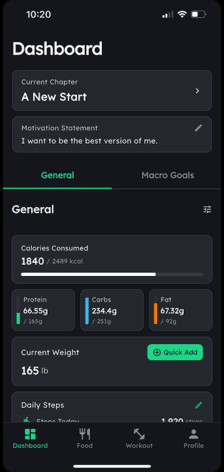
First, you need to know exactly what kind of stall you're dealing with. This is why tracking is non-negotiable. Open your logbook.
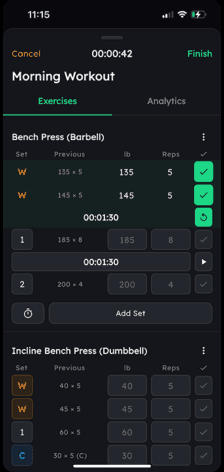
- For a Strength Stall: Look at your main compound lifts (squat, bench, deadlift, overhead press). Have the numbers for weight and reps been identical for the last 2-3 weeks? If you've been stuck at 5 reps of 225 lbs on your deadlift for three straight sessions, you have a clear strength stall.
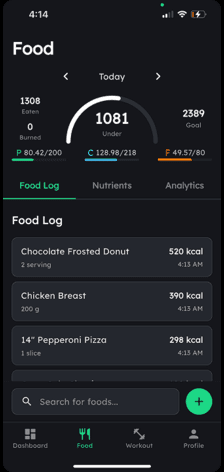
- For a Weight Loss Stall: Look at your daily weigh-ins and your food log. Calculate your average weight for week 1, week 2, and week 3. Are those three averages within 0.5 pounds of each other? And does your food log confirm you were in a calorie deficit? If yes, you have a weight loss stall.
Do not proceed until you've identified which one it is. The solutions are completely different.
Step 2: How to Fix a Strength Stall
If your lifts are stuck, you have three primary tools. Pick ONE.
- Change the Reps: If you're stalled in the 8-10 rep range, switch to a heavier weight in the 4-6 rep range for 3-4 weeks. For example, if you're stuck at 135 lbs for 3x8 on the bench press, switch to 145 lbs for 4x5. This provides a new stimulus your body hasn't adapted to.
- Increase the Weight (Micro-load): If you're close to breaking through, a tiny weight increase can be enough. Instead of jumping by 5 or 10 pounds, use 1.25 lb plates to go up by just 2.5 pounds. This small jump is often enough to trigger a new adaptation without being too heavy to lift.
- Take a Deload Week: This is the most powerful tool. For one week, cut your volume in half and your intensity by 20%. If you normally bench 200 lbs for 3 sets of 8, a deload workout would be 160 lbs for 2 sets of 8. This gives your CNS and muscles a chance to fully recover and come back stronger the following week. It feels counterintuitive, but it works.
Step 3: How to Fix a Weight Loss Stall
If the scale is stuck, your metabolism has adapted. You need to re-establish a calorie deficit. Pick ONE of these two methods.
- Decrease Calories Slightly: Reduce your daily intake by 100-200 calories. This is a small, almost unnoticeable change. If you were eating 2,000 calories per day, drop to 1,850. This is enough to get the scale moving again without a drastic cut that risks muscle loss.
- Increase Activity Slightly: Keep your calories the same, but add 2,000-3,000 steps to your daily goal. A brisk 30-minute walk is all it takes. This burns an extra 100-150 calories, re-opening the deficit without you having to eat less food. For many, this is the easier and more sustainable option.
Do not make a huge change. A small, precise adjustment is all you need to restart progress.
Your progress. Tracked and proven.
See your numbers move again. Know your plan is working every single week.
No commitment · Cancel anytime
How to Prevent Future Stalls From Happening
Breaking a plateau is a reactive process. Preventing one is proactive. Once you're back on track, you can implement these strategies to make your stalls less frequent and less severe.
First, follow a structured training program that has periodization built in. This means the program is designed to change variables like volume and intensity over an 8-12 week cycle. This keeps your body from adapting fully to any single stimulus. Stop doing random workouts you find online and commit to a single, progressive plan.
Second, schedule your deloads. Don't wait until you're burnt out and stalled. Plan to take a deload week every 8 to 12 weeks, regardless of how you feel. This is preventative maintenance for your body. It allows for full recovery and super-compensation, leading to more consistent long-term gains.
Third, incorporate diet breaks for weight loss. You cannot stay in a calorie deficit forever. After 12-16 weeks of consistent dieting, plan to spend 2 weeks eating at your new maintenance calorie level. This gives your metabolism a chance to recover, normalizes hunger hormones, and provides a huge psychological boost. You won't gain fat back; you'll just prime your body for the next phase of fat loss.
Finally, prioritize sleep. Getting 7-9 hours of quality sleep per night is the single most effective thing you can do for recovery. Your body repairs muscle, balances hormones, and recovers your nervous system while you sleep. Chronic sleep deprivation is a guaranteed way to stall your progress, no matter how perfect your training and diet are.
Frequently Asked Questions
How long does a fitness plateau last?
A true plateau lasts until you make a specific, calculated change to your training or diet. It will not fix itself. By making one of the small adjustments outlined above, you can expect to see progress resume within 1-2 weeks.
Should I take a deload week?
Yes, if you've been training hard for 8 or more weeks and your lifts are stuck or you feel constantly run down. A deload involves cutting your sets by about 30-50% and your weights by 10-20% for one full week. This allows your body to fully recover and break through the stall.
Is it better to change my exercises or my reps/weight?
Always change your reps, sets, or weight first. Your body adapts to a specific volume and intensity. Changing exercises is a valid tool, but it's best used when starting a new 8-12 week training block, not as a weekly fix for a stall.
My weight loss stalled but I'm scared to eat less. What do I do?
Instead of eating less, increase your daily non-exercise activity. Add a 30-minute walk each day. This can burn an extra 100-150 calories, which is often enough to restart weight loss without reducing your food intake and increasing hunger.
Could my stall be from not eating enough?
For a weight loss stall, this is a myth. For a strength stall, it's possible. If you are in a large, prolonged calorie deficit (over 700 calories below maintenance), your strength performance will suffer. Eating at maintenance for 1-2 weeks can restore your strength.
Conclusion
A fitness stall is not a dead end; it's a signpost. It's your body telling you that it has successfully adapted and is ready for a new challenge. Stop throwing random effort at the problem and start making small, data-driven decisions. Diagnose the issue, apply the correct fix, and you'll be back to making progress in no time.
All content and media on Mofilo is created and published for informational purposes only. It is not intended to be a substitute for professional medical advice, diagnosis, or treatment. Always seek the advice of your physician or other qualified health provider with any questions you may have regarding a medical condition, including but not limited to eating disorders, nutritional deficiencies, injuries, or any other health concerns. If you think you may have a medical emergency or are experiencing symptoms of any health condition, call your doctor or emergency services immediately.