What to Do If I Only Feel Shoulder Exercises in My Neck

We hope you enjoy reading this blog post. Ready to upgrade your body? Click here
By Mofilo Team
Published
It's one of the most common frustrations in the gym. You're trying to build strong, rounded shoulders, but every rep of a lateral raise or overhead press just leads to a tight, sore neck. This guide gives you the exact, no-BS steps to fix it for good.
Key Takeaways
- Feeling shoulder exercises in your neck is caused by overactive upper trapezius muscles compensating for weaker deltoids.
- Simply lowering the weight is a temporary fix; it doesn't solve the bad movement pattern.
- The key is to physically depress your scapula (pull shoulder blades down) to inhibit the traps from firing first.
- Start with very light weights (5-10 pounds) for high reps (15-20) to retrain the mind-muscle connection to your delts.
- It takes 2-4 weeks of consistent, light-weight practice to correct this pattern before you can add more weight.
- Leaning cable lateral raises are a superior alternative because they keep tension on the delt throughout the entire movement.
Why You Feel Shoulder Exercises in Your Neck
If you're wondering what to do if I only feel shoulder exercises in my neck, the answer isn't to just lower the weight-it's to fix the root cause: your overactive trapezius muscles are stealing the work from your deltoids. It feels like a form issue, but it's really a muscle imbalance problem, and it's incredibly common.
Your upper trapezius (traps) is the large muscle that runs from the base of your skull, across your upper back, and to your shoulders. Its job is to help elevate and rotate your shoulder blades. When you lift your arm out to the side or overhead, both your deltoid (the shoulder muscle) and your upper trap are involved.
The problem arises when your traps are dominant and your deltoids are comparatively weak or under-activated. Your body is efficient. When it needs to lift your arm, it will recruit the strongest, most familiar muscle to do the job. For many people, especially those who sit at a desk and develop forward-sloping shoulders, the traps are constantly tight and engaged. They become the default muscle for any overhead or lateral movement.
So when you grab a dumbbell for a lateral raise, your brain sends a signal to lift your arm. Instead of the side delt initiating the movement, your overactive trap fires first, shrugging your shoulder up toward your ear. The delt only helps out part-way through. The result? You finish a set of 12 reps, your delts feel nothing, and your neck feels like it's been holding a bowling ball.
This isn't your fault. It's a learned motor pattern. Pushing through it or adding more weight only reinforces this bad habit, making the traps stronger and the imbalance worse.

Finally feel your shoulders, not your neck.
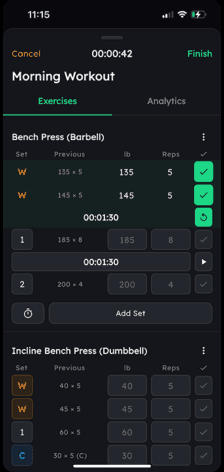
Track your lifts. See your form improve and strength grow week by week.
No commitment · Cancel anytime
The Common "Fixes" That Don't Work
You've probably already tried the obvious solutions and found they didn't work. That's because they only address the symptoms, not the root cause of the trap dominance. Here’s why the typical advice fails.
Mistake 1: Just Lowering the Weight
This is the first thing everyone tries. You drop from 20-pound dumbbells to 10s. It might feel a little better, but you still feel that familiar strain creeping into your neck by the end of the set. Why? Because you haven't changed *how* you initiate the lift.
Even with a 5-pound dumbbell, if your first instinct is to shrug upwards, your trap is still doing the work. Lowering the weight makes the movement easier, but it doesn't automatically teach your deltoids to fire correctly. You're just performing the same flawed movement pattern with less resistance.
Mistake 2: "Just Focus on the Muscle"
This is the classic "mind-muscle connection" advice. People will tell you to just concentrate really hard on feeling it in your delts. While intention is important, you can't simply think your way out of a dominant motor pattern.
It's like trying to write with your non-dominant hand by just "focusing harder." Your brain has a highway built to your dominant hand (your traps) and a dirt road built to your non-dominant hand (your delts). You need to actively pave the dirt road through physical cues and repetition, not just wish for traffic to go there.
Mistake 3: Stretching Your Neck Before or After
Stretching a tight neck feels good. It provides temporary relief by releasing tension in the overactive trap muscle. But it does absolutely nothing to fix the problem.
The trap is tight because it's overworked. The delt is weak because it's underworked. Stretching the trap without strengthening the delt is like bailing water out of a boat without plugging the hole. The tightness and pain will return as soon as you start your next set because the underlying imbalance is still there.
The 3-Step Fix to Isolate Your Delts
To stop feeling shoulder exercises in your neck, you have to actively inhibit the traps and force the deltoids to do the work. This requires a conscious, physical reset of your form. Forget the weight you think you *should* be lifting. The goal here is reprogramming the movement. Grab a pair of 5 or 10-pound dumbbells to start.
Step 1: Depress Your Scapula (The "Shoulders Down" Cue)
This is the single most important cue. Before you even begin the lift, stand up straight and actively pull your shoulder blades down. Imagine you have pockets on the back of your jeans and you're trying to tuck your shoulder blades into them. You should feel your lats engage slightly and your neck lengthen. This is the opposite of a shrug.
This position mechanically disadvantages the upper traps. By keeping your shoulders locked down, you create a stable base for the deltoid to pull from. Hold this "shoulders down" position throughout the entire set. If you feel your shoulders start to rise toward your ears, stop, reset, and start again.
Step 2: Use an Angled Path of Motion
For lateral raises, don't lift the dumbbells directly out to your sides. This pure abduction can more easily recruit the traps. Instead, bring the dumbbells slightly forward, about 30 degrees in front of your body. This is called the scapular plane.
Lifting in the scapular plane aligns better with the fibers of your medial (side) deltoid. Think about making a wide "V" shape with your arms, not a perfect "T". Lead with your elbows, and keep your pinkies slightly higher than your thumbs, as if you're pouring out a jug of water. This small tweak in angle can make a huge difference in delt activation.
Step 3: Control the Negative
Ego lifting is your enemy here. The eccentric, or lowering, phase of the lift is where you can build a powerful mind-muscle connection. Don't just let the weights drop after you lift them.
Raise the dumbbells over 1-2 seconds, and then, most importantly, control the descent for a slow 3-4 count. Fight gravity on the way down. This forces the deltoid to remain under tension for a longer period. It's during this controlled negative that you'll finally start to feel that deep burn in your side delts, not your neck.
Combine these three steps: Shoulders down, lift in a V-shape, and control the negative for 4 seconds. Perform 3-4 sets of 15-20 reps. The weight will feel ridiculously light, but the burn in your delts will be undeniable.
Your shoulder workouts. Done right.
Every set and rep logged. Proof you're building the muscle you want.
No commitment · Cancel anytime
Your New Shoulder Workout Plan (Putting It Into Practice)
Now it's time to apply these principles to a full workout. For the next 4 weeks, replace your old shoulder routine with this one. The focus is 100% on execution and feeling the correct muscle work. Do not increase the weight until you can complete all reps of all sets with zero neck strain.
This is for you if you're tired of neck pain and ready to build your shoulders the right way. This is not for you if you're obsessed with lifting heavy and unwilling to lower the weight to fix your form.
The Workout (Perform 1-2 times per week)
- Leaning Cable Lateral Raise: 3 sets of 15-20 reps.
- Why it works: This is the best delt-isolating exercise. Set a cable pulley to the lowest setting. Grab the handle with your outside hand and take a step away. Lean your body away from the machine, holding onto the frame for support. This lean places your torso at an angle, keeping tension on the medial delt through the entire range of motion, even at the bottom. Use the cues from before: shoulder down, slow negative.
- Seated Dumbbell Shoulder Press: 3 sets of 10-12 reps.
- Why it works: Sitting down provides stability and helps you focus on form. Before you press, actively pull your shoulder blades down and back. Press the dumbbells overhead, but stop just short of locking out your elbows. This keeps tension on the delts instead of shifting it to your triceps and traps. Control the weight on the way down for a 3-second negative.
- Band Face Pulls: 3 sets of 20-25 reps.
- Why it works: This movement directly counteracts the problem. It strengthens the rear delts and external rotators, which helps pull your shoulders back and improves posture. Set a band or cable at chest height. Pull the handles toward your face, aiming to get your hands next to your ears. Squeeze your shoulder blades together at the end of each rep.
What to Expect (The Realistic Timeline)
- Week 1-2: This will feel awkward. The weights will feel humbling. Your main goal is to get through the workouts feeling the burn in your delts and *only* your delts. The neck strain should be gone. If it's not, use even lighter weight or just your own arm resistance.
- Week 3-4: The movement pattern will start to feel natural. You'll have a strong mind-muscle connection and won't have to think as hard about depressing your scapula. The burn in your delts will be intense.
- Week 5 and beyond: Now, and only now, can you start to apply progressive overload. Increase the weight by the smallest increment possible, like 2.5 or 5 pounds. If the neck strain returns, you've increased too soon. Drop back down and own the lighter weight for another week.
Frequently Asked Questions
What if I still feel it in my neck after trying this?
If you still feel neck strain, the weight is too heavy, period. Drop the dumbbells and practice the movement with just your arms. Stand in front of a mirror, depress your scapula, and perform slow, controlled lateral raises. Focus on initiating from the delt. Do this for 25 reps until you feel the muscle working. The pattern matters more than the load.
Can I still do overhead press?
Yes, but with modifications. The seated dumbbell press is often better than a standing barbell press for this issue because it provides more stability. Focus intensely on keeping your shoulder blades pulled down as you press up. Stop just short of lockout to keep tension on the delts.
How often should I train shoulders with this method?
Once or twice a week is plenty. Because you're using lighter weight and perfect form, you're targeting the muscle fibers more effectively. Recovery is key. Give your delts at least 48-72 hours of rest between sessions. Quality over quantity is the rule here.
Is this a sign of an injury?
For most people, it's a muscular imbalance, not a structural injury. It's your body taking the path of least resistance. However, if you experience sharp, shooting pain, numbness, or tingling, that's different. In that case, you should stop the exercise and seek a professional evaluation.
Are face pulls really that important for this?
Yes, 100%. Face pulls are the antidote to the postural problems that cause trap dominance in the first place. They strengthen the muscles that pull your shoulders back (rear delts, rhomboids), which helps put your shoulder joint in a better position for all pressing and lifting movements.
Conclusion
Feeling your neck during shoulder exercises isn't something you have to live with. It's a sign that your body has adopted a faulty movement pattern, and you have the power to fix it.
Stop blaming your body and start retraining the movement. Drop the ego, lower the weight, and focus on perfect, deliberate execution. You'll build better shoulders and save your neck in the process.
All content and media on Mofilo is created and published for informational purposes only. It is not intended to be a substitute for professional medical advice, diagnosis, or treatment. Always seek the advice of your physician or other qualified health provider with any questions you may have regarding a medical condition, including but not limited to eating disorders, nutritional deficiencies, injuries, or any other health concerns. If you think you may have a medical emergency or are experiencing symptoms of any health condition, call your doctor or emergency services immediately.