What Foods to Avoid to Get Toned Arms

We hope you enjoy reading this blog post. Ready to upgrade your body? Try Mofilo Free
By Mofilo Team
Published
The search for what foods to avoid to get toned arms is frustrating because it’s based on a myth. The truth is, no single food is making your arms soft, and avoiding one won't magically reveal definition. Toned arms come from reducing your overall body fat percentage enough to see the muscle underneath, which is achieved with a 300-500 calorie daily deficit.
Key Takeaways
- You cannot spot-reduce arm fat by avoiding specific foods; your body loses fat from all over.
- "Toned arms" require losing overall body fat through a consistent 300-500 calorie daily deficit.
- Eating 0.8-1.0 grams of protein per pound of body weight is critical to preserve muscle while you lose fat.
- Building arm muscle with compound lifts like rows and presses is more effective than isolation curls alone.
- Liquid calories from soda, juice, and sugary coffees are the easiest things to cut to create a calorie deficit.
- Expect to see noticeable changes in arm definition after 8-12 weeks of consistent diet and training.
Why Avoiding Specific Foods Fails for Toned Arms
You’re probably here because you’ve been doing bicep curls and tricep extensions, maybe even eating “clean,” but your arms still don’t have the definition you want. You think if you just find the one “bad” food and cut it out, the tone will finally appear.
This is the biggest myth in fitness: spot reduction. You cannot tell your body to burn fat from a specific area. Your genetics decide the order in which fat comes off. For some, it’s the stomach first; for others, it’s the thighs or arms last.
Cutting out bread, sugar, or dairy won't specifically target arm fat. If you lose weight by cutting out bread, it’s because you cut out the calories from the bread, not because bread itself was the problem. You could eat bread every day and still get toned arms, as long as you are in a calorie deficit.
The real issue isn't a single food type; it's your total daily calorie intake. Fat is stored energy. When you eat more calories than your body burns, it stores the excess as fat all over your body, including your arms. To lose that fat, you must reverse the process.
This is why “eating clean” can be so misleading. A salad can have more calories than a cheeseburger. A handful of almonds, while healthy, contains around 170 calories. A tablespoon of olive oil is 120 calories. These foods are nutritious, but if you eat too many of them, you will still be in a calorie surplus and you will not lose fat.
Focusing on “foods to avoid” distracts from the only thing that matters for fat loss: creating a consistent energy deficit.

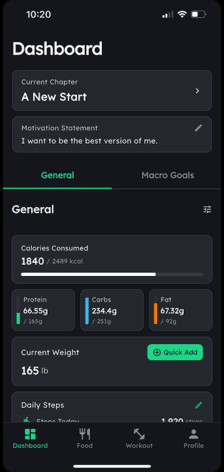
Want to see the muscle you're building?
Track your food and lifts. Watch your body change.
No commitment · Cancel anytime
The Real Enemy: A Hidden Calorie Surplus
The reason your arms lack definition is a layer of subcutaneous fat covering the muscle. This layer exists because your body is in energy balance or a slight calorie surplus. To get rid of it, you need a calorie deficit. That’s it. It’s just math.
A calorie deficit means you consume fewer calories than your body burns each day. When this happens, your body is forced to get the extra energy it needs from its stored fat reserves.
So, instead of asking what foods to avoid, ask: “What foods make it easy to overeat and create a calorie surplus?”
These are the real culprits:
- Liquid Calories: Sodas, fruit juices, sweetened teas, and fancy coffee drinks are the #1 saboteur of fat loss. A single 20-ounce bottle of soda has over 240 calories and zero nutritional value. It doesn’t make you feel full, so you eat a full meal on top of it. Cutting these out is the fastest way to create a 200-400 calorie deficit without feeling any hungrier.
- Hyper-Palatable Processed Foods: Chips, cookies, crackers, and most packaged snacks are engineered by food scientists to be irresistible. They combine salt, sugar, and fat in ratios that light up your brain’s reward centers, making it almost impossible to eat just one serving. A bag of chips can easily add 500+ calories to your day.
- Restaurant and Takeout Meals: When you eat out, you have no idea how much oil, butter, and sugar is in your food. A seemingly healthy restaurant salad can top 1,000 calories once you add the dressing, cheese, croutons, and candied nuts. Cooking at home gives you full control over your calorie intake.
Instead of banning food groups, focus on controlling the total number of calories. The foods above just make that job much harder.
The 3-Step Plan for Actually Getting Toned Arms
Forget about what to avoid. Here is the exact, actionable plan that works. “Toned” is the result of two things: having enough muscle and having low enough body fat to see it. This plan addresses both.
Step 1: Create a Sustainable Calorie Deficit
This is non-negotiable. You must be in a calorie deficit to lose fat. A good target is a deficit of 300-500 calories per day. This is aggressive enough to produce results (about 0.5-1 pound of fat loss per week) but not so aggressive that you lose muscle or burn out.
- Find Your Maintenance: A simple way to estimate your maintenance calories is to multiply your body weight in pounds by 15. If you weigh 150 pounds, your estimated maintenance is 2,250 calories (150 x 15). This is the amount you need to eat to stay the same weight.
- Set Your Target: Subtract 300-500 from your maintenance number. For our 150-pound person, a target of 1,750-1,950 calories per day is perfect for fat loss.
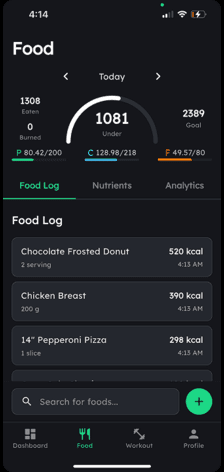
- Track Everything: For the first 2-4 weeks, you must track everything you eat and drink using an app. This isn't forever, but it's the only way to learn what 1,800 calories actually looks like. You will be surprised at how quickly small things add up.
Step 2: Prioritize Protein to Keep and Build Muscle
If you just cut calories without paying attention to protein, you’ll lose muscle along with fat. This will leave you looking “skinny-fat,” not toned. Protein tells your body to burn fat for energy while preserving your hard-earned muscle.
- Set Your Protein Goal: Aim for 0.8 to 1.0 grams of protein per pound of your target body weight. For that 150-pound person, this means eating 120-150 grams of protein per day.
- Build Your Meals Around Protein: Every meal should have a primary protein source. This keeps you full and makes it easy to hit your goal. Good sources include chicken breast (45g protein per 6oz), Greek yogurt (20g per cup), eggs (6g each), and whey protein powder (25g per scoop).
Step 3: Build the Arm Muscles You Want to Reveal
You can’t reveal muscle that isn’t there. While you’re in a calorie deficit to burn fat, you need to lift weights to build your biceps, triceps, and shoulders.
- Focus on Compound Lifts: These are multi-joint exercises that build the most muscle in the least time. They are far more effective than endless curls. Your routine should be built around them.
- For Biceps & Back: Bent-Over Rows, Pull-ups (or Lat Pulldowns)
- For Triceps & Shoulders/Chest: Push-ups, Overhead Press, Bench Press
- Add Isolation Work: After your compound lifts, you can add 1-2 exercises to directly target your arms.
- Biceps: Dumbbell Curls, Hammer Curls
- Triceps: Tricep Pushdowns, Skull Crushers
- The Plan: Train your full body 3 times per week on non-consecutive days (e.g., Mon/Wed/Fri). For each exercise, perform 3-4 sets of 8-15 repetitions. Focus on getting stronger over time (lifting more weight or doing more reps).
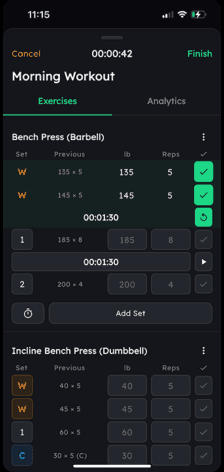
The proof your hard work is paying off.
See your measurements change and lifts go up, all in one place.
No commitment · Cancel anytime
What to Expect: A Realistic Timeline
Getting toned arms doesn't happen overnight. Consistency with your diet and training is everything. Here’s a realistic timeline so you know what to expect and don’t get discouraged.
Weeks 1-2: The Adjustment Period
You will be tracking your food and getting used to a new eating and training schedule. The scale might fluctuate daily due to water weight, so don't panic. You might feel a bit hungrier as your body adjusts to the calorie deficit. Your job is to stick to the plan no matter what. Trust the process.
Weeks 3-4: Consistent Progress
By now, the habits are starting to form. You should see a consistent downward trend on the scale, losing between 0.5 and 1.5 pounds per week. Your lifts in the gym should feel strong, and you might notice your clothes fitting a little looser around your waist. This is the first sign that you're losing overall body fat.
Weeks 8-12: Visible Changes
This is where the magic happens. After two months of consistency, the fat loss starts to become visually apparent. You'll look in the mirror and see more definition in your shoulders. When you flex your bicep, the peak will look higher. Your triceps will start to show separation. This is the payoff for your hard work.
Month 3 and Beyond: The Toned Look
As you continue to follow the plan, the definition becomes permanent, not just something you see when you have a pump at the gym. Your arms will look lean and strong even when relaxed. At this point, you've built a foundation of habits that you can maintain for life. You understand that food is fuel and the gym is for building, not for punishment.
Frequently Asked Questions
Do I need to cut out carbs or sugar to get toned arms?
No, you do not need to cut out any food group, including carbs or sugar. You only need to maintain a calorie deficit. Carbs provide the energy for your workouts. However, refined sugars and simple carbs are very easy to overeat and don't keep you full, which can make staying in a deficit harder.
How much cardio should I do for toned arms?
Cardio is a tool to help you create a calorie deficit, but it is not required for fat loss. Strength training is more important for building the muscle that creates a “toned” look. If you enjoy cardio, 2-3 sessions of 20-30 minutes of low-intensity activity per week is more than enough.
Can I just do arm exercises every day?
No, this is counterproductive. Muscles grow and repair during rest, not during the workout itself. Training your arms every day prevents recovery and can actually hinder growth. Hitting them with intensity 2-3 times per week as part of a full-body routine is the most effective approach.
Why do my arms look bigger after I started lifting?
This is called “the pump.” When you lift weights, blood rushes to the muscles, making them temporarily swell and feel bigger. It’s a good sign that you’re effectively targeting the muscle. You are not getting “bulky.” This temporary swelling goes down within a few hours. Real muscle growth is a much slower process.
Conclusion
Getting toned arms has nothing to do with avoiding specific foods and everything to do with reducing your overall body fat while building muscle. Stop looking for a magic food to cut and start focusing on the proven system: a calorie deficit, high protein intake, and progressive strength training. Start by tracking your calories today.
All content and media on Mofilo is created and published for informational purposes only. It is not intended to be a substitute for professional medical advice, diagnosis, or treatment. Always seek the advice of your physician or other qualified health provider with any questions you may have regarding a medical condition, including but not limited to eating disorders, nutritional deficiencies, injuries, or any other health concerns. If you think you may have a medical emergency or are experiencing symptoms of any health condition, call your doctor or emergency services immediately.