Is 80/20 Rule Good Enough for Diet Reddit

We hope you enjoy reading this blog post. Ready to upgrade your body? Try Mofilo Free
By Mofilo Team
Published
You're tired of perfect diets. The kind that demand 100% clean eating, forbid your favorite foods, and make you feel like a failure for having one slice of pizza. You've tried it, it didn't last, and now you're looking for something that actually works for a normal person with a real life. That's why the 80/20 rule is so appealing.
Key Takeaways
- The 80/20 rule is an excellent tool for sustainable fat loss, but only when applied to your total weekly calories, not arbitrary meals or days.
- To lose weight with the 80/20 rule, you must still be in a calorie deficit of 300-500 calories per day; the rule itself does not cause fat loss.
- Your "80%" should consist of nutrient-dense, high-satiety foods like lean proteins, vegetables, and complex carbs to manage hunger and provide nutrients.
- Your "20%" is a flexible calorie budget for fun foods, which prevents the binge-restrict cycle common with stricter diets.
- The biggest mistake is guessing your percentages. The 80/20 rule only works if you track your calorie intake accurately.
- Applying the rule by "meals" (e.g., one cheat meal) often leads to overconsumption, wiping out an entire week's progress in a single sitting.
What Is the 80/20 Rule for Dieting?
When you ask, "is 80/20 rule good enough for diet reddit," you're really asking if you can lose weight without being miserable. The answer is yes. The 80/20 rule is a principle for sustainable eating, not a magic diet. It states that you should aim to get 80% of your calories from whole, nutrient-dense foods and allow 20% to come from foods you simply enjoy.
This isn't about labeling foods as "good" or "bad." It's about managing a calorie budget in a way that keeps you sane.
Your "80%" foods are the foundation. These are the foods that keep you full, provide vitamins and minerals, and support muscle retention. Think things like:
- Lean Protein: Chicken breast, fish, lean beef, eggs, Greek yogurt
- Vegetables: Broccoli, spinach, peppers, salads
- Fruits: Apples, berries, bananas
- Complex Carbs: Oats, potatoes, brown rice, quinoa
Your "20%" foods are for flexibility and enjoyment. This is the slice of birthday cake, the beer with friends, or the chocolate bar after a long day. These foods provide psychological relief and make the diet feel less restrictive.
Here’s the math. If your daily calorie target for fat loss is 2,000 calories:
- 80% Budget: 1,600 calories from nutrient-dense foods.
- 20% Budget: 400 calories for whatever you want.
That 400-calorie budget is the difference between sticking to your plan for six months versus quitting after six days.

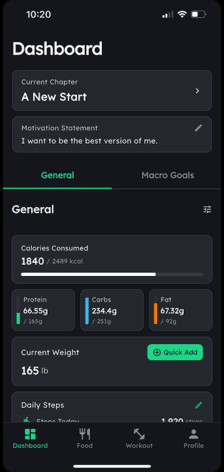
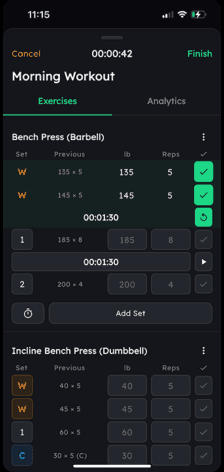
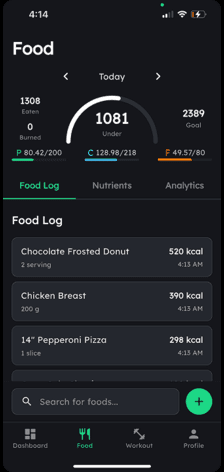
Stop guessing with your diet.
Track your food. Know you are hitting your numbers every single day.
No commitment · Cancel anytime
Why Applying 80/20 by "Meals" or "Days" Fails
This is the most common mistake and the reason people claim the 80/20 rule doesn't work. They don't apply it to calories; they apply it to meals or days, which is a recipe for disaster.
You've seen it on Reddit threads. Someone says they eat clean all week and have a "cheat day" on Saturday. This approach almost always sabotages progress.
Let's do the math. Say your maintenance calories are 2,500 and you're eating 2,000 calories a day to lose weight. That's a 500-calorie deficit per day.
From Sunday to Friday (6 days), you create a total deficit of 3,000 calories. You're on track to lose nearly a pound.
Then Saturday comes. Your "20%" cheat day. You have pancakes for breakfast (800 calories), a burger and fries for lunch (1,200 calories), and pizza and beer for dinner (2,000 calories). You end the day at 4,000 calories. That's a surplus of 1,500 calories over your maintenance.
Your weekly result:
- Deficit from 6 days: -3,000 calories
- Surplus from 1 day: +1,500 calories
- Net Weekly Deficit: -1,500 calories
You just cut your fat loss for the week in half. Do this every week, and your progress slows to a crawl. You feel like you're working hard for nothing.
The "cheat meal" approach is just as flawed. A single restaurant meal with an appetizer, main course, and dessert can easily top 2,500 calories. That one meal can erase your entire daily deficit and then some. It's not a "20%" meal; it's a 125% meal.
This is why the only way for the 80/20 rule to be effective is by applying it to your total weekly calorie budget.
How to Apply the 80/20 Rule Correctly (The Calorie Method)
Forget "cheat meals." Start thinking like an accountant managing a budget. This four-step method is how you make the 80/20 rule actually work for fat loss.
Step 1: Calculate Your Total Weekly Calories
First, you need your daily calorie target. Use an online TDEE (Total Daily Energy Expenditure) calculator. It will give you an estimate of the calories you burn per day.
To lose about one pound per week, subtract 500 calories from your daily maintenance number. For example, if your TDEE is 2,500 calories, your daily target for fat loss is 2,000 calories.
Now, get your weekly budget. This is the number that truly matters.
2,000 calories/day x 7 days = 14,000 calories/week
This is your budget. As long as you stay at or below this number by the end of the week, you will lose weight.
Step 2: Calculate Your 80% and 20% Calorie Budgets
Now, apply the 80/20 rule to your weekly budget.
- 80% (Nutrient-Dense) Budget: 14,000 x 0.80 = 11,200 calories
- 20% (Flexible) Budget: 14,000 x 0.20 = 2,800 calories
That 2,800 calories is your fun fund for the week. You can spend it however you want. You can have 400 calories of ice cream every night. Or you can save it all up for a 1,500-calorie dinner out on Saturday and still have 1,300 calories left for other treats during the week.
This flexibility is what makes it sustainable.
Step 3: Track Everything You Eat
This system is built on numbers. It falls apart without tracking. You cannot intuitively guess what 80% and 20% look like. A handful of nuts or a tablespoon of olive oil can have far more calories than you think.
Use a tracking app. For the first 90 days, be meticulous. Weigh your food. Scan barcodes. Log every single thing that goes in your mouth, whether it's from your "80%" or "20%" budget.
This isn't forever. This is a learning phase. You are teaching yourself the caloric cost of food. After a few months, you'll have the skill to estimate portions accurately.
Step 4: Prioritize Protein Within Your "80%"
Within your 11,200-calorie "80%" budget, your top priority is hitting your protein goal. Protein keeps you full and tells your body to burn fat instead of muscle while in a deficit.
Aim for 1.6 to 2.2 grams of protein per kilogram of your body weight (or about 0.8 to 1.0 grams per pound).
For a 180 lb (82 kg) person, this is 131-180 grams of protein per day. Focus on getting this from your "80%" foods. The rest of your 80% budget can be filled with healthy fats and complex carbs.
Your diet numbers. On track.
No more wondering if you ate right. See exactly what’s working.
No commitment · Cancel anytime
What to Expect (A Realistic Timeline)
Adopting the 80/20 calorie budget method isn't a quick fix; it's a long-term strategy. Here’s what the journey looks like.
Weeks 1-2: The Adjustment Period
The first two weeks are about learning the system. Tracking everything will feel tedious. You'll be surprised by the calorie counts of some foods. You might mess up your budget. That's okay. The goal here is not perfection; it's practice. Don't even worry about the scale too much. Just focus on the habit of tracking.
Weeks 3-8: Finding Your Groove
By now, tracking becomes faster. You'll start to build a library of your favorite meals. You'll see how you can easily fit a 500-calorie dessert into your day by making small adjustments to your lunch. The scale should be moving down consistently, about 0.5-1% of your body weight per week. You'll feel a sense of control you never had with all-or-nothing diets.
Month 3 and Beyond: It Becomes Automatic
This is where the magic happens. You've internalized the calorie costs of your common foods. You can go to a restaurant, look at a menu, and make a very accurate estimate of the calories in a dish. You no longer fear social events. You know how to budget for them.
What happens if you go over your 20% budget? Nothing. It just means you have less to spend later in the week. If you have a huge 3,000-calorie Saturday, you just eat a bit lighter on Sunday. It's about the weekly average, not daily perfection. This mindset shift is the single biggest benefit of the 80/20 calorie method.
It removes the guilt and the "I'll start again Monday" mentality that kills progress.
Frequently Asked Questions
Is the 80/20 rule the same as IIFYM?
They are very similar, but with one key difference. IIFYM (If It Fits Your Macros) states you can eat whatever you want as long as you hit your macro and calorie targets. The 80/20 rule adds a guideline for food quality, encouraging you to prioritize nutrient-dense foods for the majority of your intake.
How many cheat meals is 20 percent?
This is the wrong way to think about it. The concept of a "cheat meal" encourages a binge mentality. Instead, think of your 20% as a flexible budget. For a 14,000-calorie weekly target, you have 2,800 calories to use on whatever foods you enjoy, whenever you want.
Can you build muscle with the 80/20 rule?
Yes. Building muscle is about three things: a calorie surplus (or maintenance), adequate protein (1.6-2.2g per kg of bodyweight), and progressive overload in your training. The 80/20 rule is simply a tool to manage your calories and food quality, which works for any body composition goal.
Do I have to track calories forever?
No. The goal of tracking is to educate yourself. You track meticulously for 3-6 months to build the skill of understanding portion sizes and calorie density. After that, you can transition to a more intuitive approach because you've learned what a 2,000-calorie day actually looks and feels like.
Conclusion
The 80/20 rule is more than good enough; it's one of the most effective strategies for long-term success because it's built for humans, not robots. But it only works when you ditch the idea of "cheat days" and apply the principle to a tracked, weekly calorie budget.
Stop aiming for perfection you can't maintain. Start aiming for consistency you can't break.
All content and media on Mofilo is created and published for informational purposes only. It is not intended to be a substitute for professional medical advice, diagnosis, or treatment. Always seek the advice of your physician or other qualified health provider with any questions you may have regarding a medical condition, including but not limited to eating disorders, nutritional deficiencies, injuries, or any other health concerns. If you think you may have a medical emergency or are experiencing symptoms of any health condition, call your doctor or emergency services immediately.