How to Eat More Food When You're Bulking but Not Hungry

We hope you enjoy reading this blog post. Ready to upgrade your body? Click here
By Mofilo Team
Published
Trying to gain muscle means you need to eat in a calorie surplus. But when your stomach is telling you it's full, getting those extra calories in feels impossible. This guide breaks down exactly how to eat more without feeling sick or bloated.
Key Takeaways
- Aim for 5-6 smaller, more frequent meals instead of 3 large ones to manage fullness and keep your body in an anabolic state.
- Incorporate liquid calories like a protein shake with olive oil or peanut butter to add 500-800 calories with minimal volume.
- Prioritize calorie-dense foods like nuts, seeds, oils, and full-fat dairy over high-volume, low-calorie foods like leafy green vegetables.
- Adding just 1-2 tablespoons of olive oil to shakes or meals can add 120-240 calories with almost no effort.
- A successful lean bulk requires a 250-500 calorie surplus, which should result in a weight gain of 0.5-1 pound per week.
Why You're Not Hungry (But Need to Eat)
The solution for how to eat more food when you're bulking but not hungry isn't about painfully stretching your stomach. It's about making your food choices smarter and more efficient. You're training hard, but if you're not giving your body the raw materials to build muscle, you're just spinning your wheels.
Muscle growth, or hypertrophy, requires a calorie surplus. This means consuming more calories than your body burns. A good target for a lean bulk is a surplus of 250-500 calories above your Total Daily Energy Expenditure (TDEE). This small surplus provides enough energy to build new muscle tissue while minimizing fat gain.
The problem is your body's natural appetite regulation. Your system is designed to maintain a stable weight, or homeostasis. When you suddenly increase your food intake, your body sends signals of fullness (satiety) to encourage you to stop eating. This is a survival mechanism that's now working against your fitness goals.
Furthermore, many people fall into the "clean eating" trap. They try to bulk on chicken breast, broccoli, and brown rice. While healthy, these foods are incredibly filling for the number of calories they provide. A huge plate of this food might only be 500-600 calories, leaving you feeling stuffed but still short of your goal. To successfully bulk, you have to shift your mindset from eating "clean" to eating "dense."

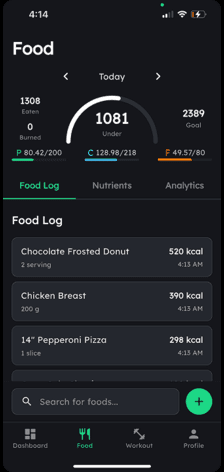
Stop guessing if you ate enough.
Track your calories and macros. Know you're giving your body fuel to grow.
No commitment · Cancel anytime
The Common Mistakes That Keep You Stuck
If you're struggling to eat enough, you're likely making one of these three common mistakes. Fixing them is the key to unlocking consistent growth.
Mistake 1: Relying on High-Volume, Low-Calorie Foods
This is the number one reason people fail their bulk. You fill your plate with fibrous vegetables and lean proteins, which are great for cutting but terrible for gaining mass. Your stomach can only hold so much volume.
Think about it this way: 200 calories of broccoli is nearly six cups. You'd be uncomfortably full. But 200 calories of peanut butter is just two tablespoons. It takes up almost no space in your stomach but provides the same energy. To eat more, you must prioritize foods that pack the most calories into the smallest package.
Mistake 2: Trying to Eat 3 Giant Meals
Force-feeding yourself three massive meals a day is a recipe for disaster. It leads to bloating, indigestion, and feeling lethargic as your body struggles to digest a huge food bolus. This approach makes eating feel like a chore you dread.
Your digestive system works better with a steady stream of nutrients, not a sudden flood. Trying to cram 1,200 calories into a single meal will spike your blood sugar, make you feel sleepy, and likely leave you feeling too full to even think about your next meal.
Mistake 3: Fearing Fats and "Dirty" Foods
Somewhere along the line, fitness culture made people afraid of dietary fat. This is a huge mistake when bulking. Fats are your most powerful tool for increasing calories. They contain 9 calories per gram, more than double the 4 calories per gram found in protein and carbohydrates.
This doesn't mean you should start a "dirty bulk" by living on pizza and ice cream, which can lead to excessive fat gain and poor health. It means you should strategically add healthy, calorie-dense fats to your meals. Things like olive oil, avocados, nuts, and seeds are your best friends during a bulk.
Your calorie target. Hit every day.
No more guessing. Track your food and see the results you've been working for.
No commitment · Cancel anytime
The 4-Step Method to Eat More Without Feeling Full
Stop force-feeding and start being strategic. This four-step method will help you hit your calorie target consistently without the constant feeling of being stuffed.
Step 1: Embrace Liquid Calories
This is the easiest and most effective way to add calories. Liquids digest faster than solid food and don't trigger the same satiety signals. A well-made shake can be the difference between hitting your numbers and failing.
The 800-Calorie Gainer Shake:
- 1 scoop (30g) whey protein: 120 calories
- 1 cup whole milk: 150 calories
- 1/2 cup rolled oats: 150 calories
- 2 tablespoons peanut butter: 190 calories
- 1 tablespoon olive oil: 120 calories
- 1 banana: 100 calories
This shake is easy to drink in 5-10 minutes and provides more calories than a large chicken breast and rice meal, with none of the bloating. Drink one of these between your solid meals each day.
Step 2: Increase Meal Frequency
Instead of three huge meals, switch to 5-6 smaller, more manageable ones. This keeps a steady supply of nutrients flowing to your muscles and prevents you from ever feeling uncomfortably full.
Sample 5-Meal Schedule:
- Meal 1 (8 AM): Scrambled eggs with cheese, toast with butter.
- Meal 2 (11 AM): Greek yogurt with nuts and honey.
- Meal 3 (2 PM): The 800-Calorie Gainer Shake.
- Meal 4 (5 PM): Chicken thighs with rice and avocado.
- Meal 5 (8 PM): Ground beef with pasta and olive oil.
Each meal is moderate in size, making it easy to finish and get ready for the next one in a few hours.
Step 3: Add "Calorie Toppers" to Every Meal
This is where you can sneak in hundreds of extra calories without noticing. Identify the meals you're already eating and find ways to add calorie-dense toppers.
- Cooking your eggs or meat? Use an extra tablespoon of butter or oil (100-120 calories).
- Having rice or pasta? Drizzle a tablespoon of olive oil over it after cooking (120 calories).
- Eating yogurt or oatmeal? Add a handful of almonds or walnuts (160-180 calories).
- Making a sandwich? Add a slice of cheese (100 calories) and a few slices of avocado (80 calories).
These small additions add up quickly and can easily push you into a surplus.
Step 4: Choose Calorie-Dense Versions of Foods
Make simple swaps to increase your calorie intake without increasing food volume.
- Instead of skim milk, use whole milk. (Adds 60 calories per cup)
- Instead of chicken breast, use chicken thighs. (Adds 50-70 calories per serving)
- Instead of 0% fat Greek yogurt, use 5% fat. (Adds 80 calories per serving)
- Instead of potatoes, choose pasta or rice. (More carbs and calories per gram)
These choices are just as nutritious but provide the extra energy your body needs to grow.
What to Expect (A Realistic Timeline)
When you start eating in a surplus, you will gain weight. The goal is to make sure most of that weight is muscle, not fat. Aim for a slow and steady weight gain of 0.5 to 1 pound per week. For women, this target is closer to 0.25 to 0.5 pounds per week.
If the scale is moving faster than that, you're likely in too large of a surplus and gaining excess body fat. If it's not moving at all, you're not in a surplus and need to add another 200-300 calories to your day.
Be prepared to gain some body fat. It is an unavoidable part of a successful bulk. A realistic and highly successful outcome is achieving a muscle-to-fat gain ratio of 2:1 or 3:1. You can't build a house without some leftover scraps, and you can't build muscle without gaining a little fat.
The most important metric to track is your strength in the gym. Your lifts should be progressing week after week. If your body weight is going up but your deadlift, squat, and bench press are stalled, you need to re-evaluate your training or your surplus. Weight gain without strength gain is just fat gain.
Frequently Asked Questions
How many calories should I eat for a bulk?
Start by calculating your Total Daily Energy Expenditure (TDEE) using an online calculator. Add 250-500 calories to that number. This is your starting daily calorie target for a lean bulk. Monitor your weight for 2 weeks and adjust from there.
Is it okay to drink my calories?
Yes, drinking calories is one of the most effective strategies for bulking when you're not hungry. Aim for about 25-30% of your total daily calories to come from liquids, like a well-formulated gainer shake, to make hitting your target easier.
What if I feel sick from eating so much?
If you feel sick, you are eating too much in a single sitting. Reduce your meal portion sizes and increase your meal frequency to 6-7 smaller meals per day. The goal is to feel satisfied after a meal, not painfully stuffed.
Will I get fat from eating more fats?
No, eating dietary fat does not automatically make you fat. Consuming more calories than your body burns makes you gain fat. Healthy fats are simply a calorie-dense tool to help you efficiently reach your surplus without excessive food volume.
How long should I bulk for?
A typical bulking phase lasts 12-16 weeks. A good rule of thumb is to continue your bulk until you've gained about 10-15% of your starting body weight. After that, you can transition into a maintenance phase or a cutting phase to shed any excess fat.
Conclusion
Learning how to eat more when you're not hungry is a skill built on strategy, not brute force. Stop trying to eat massive, filling meals and start using liquid calories, calorie-dense toppers, and increased meal frequency. Your appetite will adapt, and your progress in the gym will finally have the fuel it needs to take off.
All content and media on Mofilo is created and published for informational purposes only. It is not intended to be a substitute for professional medical advice, diagnosis, or treatment. Always seek the advice of your physician or other qualified health provider with any questions you may have regarding a medical condition, including but not limited to eating disorders, nutritional deficiencies, injuries, or any other health concerns. If you think you may have a medical emergency or are experiencing symptoms of any health condition, call your doctor or emergency services immediately.