How Do You Stay Disciplined With Fitness When No One Is Watching

We hope you enjoy reading this blog post. Ready to upgrade your body? Click here
By Mofilo Team
Published
The real answer to how do you stay disciplined with fitness when no one is watching has nothing to do with willpower and everything to do with data. You don't need more motivation. You need a better system.
Key Takeaways
- Discipline is a system you build, not a feeling you have. It's about tracking inputs, not just hoping for outcomes.
- Your environment dictates over 80% of your success. A prepared environment beats willpower every time.
- Start with a "Too Small to Fail" goal, like a 10-minute walk or two 30-minute gym sessions per week, to build momentum.
- Use the "2-Day Rule" for consistency: you can miss one planned day, but you are not allowed to miss two days in a row.
- Shift your identity from "someone trying to get fit" to "a person who trains." This reframes your actions as part of who you are.
- Track one simple metric, like total weekly sets or protein intake, to get objective proof that you're making progress, even when you don't feel like it.
Why 'More Willpower' Is a Losing Strategy
Let’s be honest. You’re searching for how to stay disciplined with fitness when no one is watching because you’ve tried relying on motivation and it failed. You started a new program, felt excited for the first week, and then life got in the way. The alarm felt heavier. The couch felt comfier. No one was there to cheer you on, so you stopped.
You feel guilty. You think there's something wrong with your willpower or that you're just not a “disciplined person.” This is the biggest lie in fitness.
Discipline is not a personality trait. It’s a system. Relying on willpower is like trying to drive across the country with only the gas in your tank. You’ll run out. Motivation is a feeling, and feelings are temporary. A system is a process, and processes are repeatable.
Here’s the truth: The most disciplined people you know aren't superheroes. They have simply made the right choice the easiest choice. They don't debate going to the gym every morning; the decision was already made the night before. They've built an environment and a process that removes emotion from the equation.
Your problem isn't a lack of motivation. Your problem is a lack of proof. When you don't see immediate results on the scale or in the mirror, your brain tells you the effort isn't worth it. The solution is to create your own proof by tracking the work itself.

Your motivation is gone. Your progress isn't.
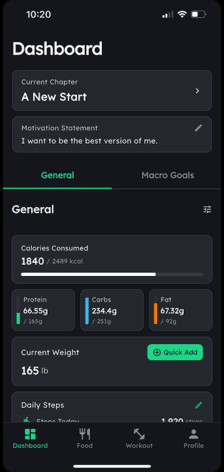
See your progress in one place. Get proof that your hard work is paying off.
No commitment · Cancel anytime
The 3-Step System to Build Discipline That Lasts
Forget trying to feel motivated. Instead, build a system that works whether you feel like it or not. This is how you build discipline from the ground up. It’s about data, not drama.
Step 1: Set a 'Too Small to Fail' Goal
Your past attempts failed because you aimed too high, too fast. You went from zero workouts to trying for five a week. That's a recipe for burnout. We're going to do the opposite.
Your goal for the next 30 days is to be so easy you'd feel embarrassed not to do it. Examples:
- If you want to run: Walk for 10 minutes, 3 times a week.
- If you want to lift: Go to the gym twice a week and do just 3 exercises.
- If you want to eat better: Track only your protein intake for the day.
The goal isn't to get six-pack abs in a month. The goal is to prove to yourself that you can show up. That's it. You are building the identity of someone who is consistent. After 30 days of hitting a 100% success rate, you can add 5 minutes to your walk or one more exercise to your workout.
Step 2: Track the Input, Not the Outcome
Stop obsessing over the scale. The scale is a terrible measure of progress in the short term. It fluctuates with water, salt, and stress. It lies.
Instead, you will track the one thing you have 100% control over: your effort. This is your new scoreboard. Pick ONE metric to track:
- For lifting: Total number of sets completed per week.
- For running: Total minutes run per week.
- For diet: Number of days you hit your protein goal.
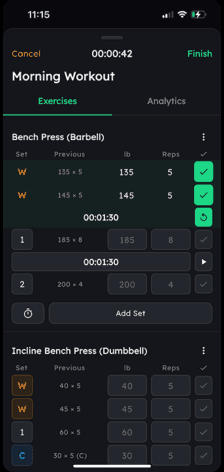
Every time you complete your tiny goal, you mark it down. You are building a chain of wins. Seeing that chain grow is more motivating than any quote on Instagram. It’s objective proof that you are putting in the work. This data becomes your motivation when your feelings fail you.
Step 3: Use the '2-Day Rule'
Consistency isn't about being perfect. It's about not letting one mistake turn into a downward spiral. This is where the 2-Day Rule comes in.
You can miss one planned workout. Life happens. You get sick, you have a deadline, you're exhausted. That's fine. But you are absolutely forbidden from missing two days in a row.
Missed your Tuesday workout? Fine. But you MUST do something on Wednesday, even if it's just your 10-minute walk. This rule prevents the “I’ll start again next week” mindset that kills all progress. One missed day is an accident. Two missed days is the start of a new, unwanted habit.
Your streak. Your progress. Your proof.
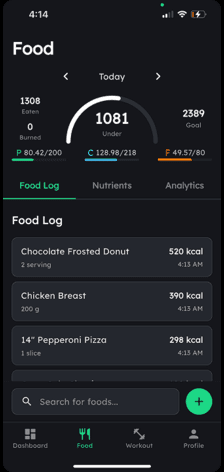
See how far you've come, even on days you feel weak. Keep going.
No commitment · Cancel anytime
How to Build a High-Discipline Environment
Your environment is more powerful than your willpower. If you have cookies on the counter, you'll eat them. If your gym clothes are buried in a drawer, you won't go. To stay disciplined when no one is watching, you need to rig the game in your favor.
Your home and schedule should make fitness the path of least resistance.
Prepare Everything the Night Before
Decision fatigue is real. The more choices you have to make, the more likely you are to choose the easiest one (staying in bed). Eliminate morning decisions.
Before you go to sleep, lay out everything you need:
- Gym clothes
- Socks and shoes
- Headphones
- Water bottle (filled)
- Pre-workout or coffee maker ready to go
When your alarm goes off, you don't have to think. You just execute. The decision was made by a more disciplined version of you last night.
Schedule It Like a Doctor's Appointment
“I’ll work out later” means “I’m not working out.” Vague intentions fail. Specific plans succeed.
Open your calendar right now. Block out the exact day and time for your workouts for the next two weeks. Treat it like an unbreakable meeting with your most important client: yourself. It’s not optional. It’s not flexible. It’s a commitment you honor.
When someone asks if you're free at that time, the answer is, “No, I have an appointment.” You don't need to explain. It's non-negotiable.
Use 'Temptation Bundling'
This technique pairs something you *need* to do with something you *want* to do. It makes the hard thing more attractive.
- Only listen to your favorite podcast while you're on your walk or at the gym.
- Only watch your favorite Netflix show while you're on the treadmill or exercise bike.
Your brain will start to associate the workout with the reward, making you actually look forward to it. You're hacking your own reward system to build the habit you want.
What to Do When You Inevitably Slip Up
Perfection is not the goal. Resilience is. You will have a bad day. You will eat something off-plan. You will miss a workout. The difference between people who succeed and people who fail is how they respond to that moment.
Failing isn't falling off the wagon. Failing is seeing the wagon drive away and not getting back on.
Your first instinct will be guilt. You'll think, “I ruined it. I might as well give up.” This is your brain's lazy way out. Your job is to ignore it and get clinical.
A missed workout isn't a moral failing; it's a data point. Ask yourself why it happened:
- Was I too sore? Maybe I need an extra rest day or a lighter session.
- Did I run out of time? Maybe I need to schedule my workout earlier.
- Was I just not feeling it? Maybe my "Too Small to Fail" goal is still too big.
Use the failure to adjust your system. Don't blame your character. If your plan was to work out 4 times a week and you only made it twice, your plan for next week isn't to try for 5. It's to aim for 2 and nail it. Then build from there.
Remember the 2-Day Rule. You missed today. That's the data. The only thing that matters now is what you do tomorrow. Get back on track immediately. The sooner you get another win, the smaller the failure feels.
Frequently Asked Questions
How do I start when I have zero motivation?
Use the 5-Minute Rule. Tell yourself you only have to do the activity for 5 minutes. Put on your shoes and walk for 5 minutes. Do one set of push-ups. Action creates motivation, not the other way around. After 5 minutes, you can stop, but you'll likely keep going.
What's more important for discipline: diet or exercise?
Start with the one that feels easier to control. For most people, scheduling and tracking two 30-minute workouts is far less overwhelming than completely overhauling their diet. Nail the exercise habit first, then use that confidence to start tracking your food.
How long does it take to build a fitness habit?
Forget the “21 days” myth. For a complex activity like working out, it takes an average of 66 days-and up to 90 days-for it to feel automatic. Focus on getting through the first 8 weeks of consistent tracking. The process will feel much easier after that point.
Is it bad to rely on a tracking app?
No, it's smart. A pilot uses instruments to fly a plane, even on a clear day. A tracking app is your instrument panel. It provides objective data, removes emotion, and shows you the proof that you are moving forward, which is the ultimate fuel for discipline.
Conclusion
Discipline isn't a magical trait you're born with. It's a skill you build by creating a system that doesn't rely on how you feel. Track your inputs, make your environment work for you, and never miss twice. That is the real secret to staying disciplined when no one is watching.
All content and media on Mofilo is created and published for informational purposes only. It is not intended to be a substitute for professional medical advice, diagnosis, or treatment. Always seek the advice of your physician or other qualified health provider with any questions you may have regarding a medical condition, including but not limited to eating disorders, nutritional deficiencies, injuries, or any other health concerns. If you think you may have a medical emergency or are experiencing symptoms of any health condition, call your doctor or emergency services immediately.