Do You Need Carbs for Muscle Growth When Cutting

We hope you enjoy reading this blog post. Ready to upgrade your body? Click here
By Mofilo Team
Published
The idea that you need to eliminate carbs to lose fat is one of the most persistent and damaging myths in fitness. It leads to stalled progress, terrible workouts, and unnecessary muscle loss. This guide will give you the direct answer and a clear plan.
Key Takeaways
- You need at least 100-150 grams of carbs daily to preserve muscle and fuel performance while cutting.
- Carbs are "protein-sparing," meaning they prevent your body from burning muscle tissue for energy.
- A calorie deficit drives fat loss, not the elimination of carbohydrates from your diet.
- Your workout performance is the best indicator; if your lifts are consistently dropping, your carbs are likely too low.
- The best time to eat carbs is 60-90 minutes before your workout to maximize energy and training intensity.
- Set your protein intake first (1.8-2.2g per kg), then fats (20-25% of calories), and fill the rest with carbs.
Why Carbs Are Critical for Muscle on a Cut
To answer the question, "do you need carbs for muscle growth when cutting?"-the answer is an emphatic yes. You've probably been told that carbs are the enemy of fat loss. This is the first belief we need to dismantle. Without adequate carbs, your cut will fail, you'll lose hard-earned muscle, and your workouts will feel miserable.
Carbohydrates are your body's primary and preferred source of fuel for high-intensity exercise, like lifting weights. When you eat carbs, your body breaks them down into glucose and stores them in your muscles and liver as glycogen. When you lift, your muscles use this stored glycogen for energy.
If you cut your carbs too low, your glycogen stores will be depleted. This has two disastrous effects:
- Your Performance Tanks: Without fuel, you can't lift heavy or with intensity. You'll feel weak, your reps will drop, and you won't be able to push hard. This lack of intense training sends a signal to your body that it no longer needs to maintain its metabolically expensive muscle tissue. The result? Muscle loss.
- Your Body Burns Muscle for Fuel: Carbs are "protein-sparing." When glycogen is available, your body uses it for energy. When it's not, your body needs to find energy elsewhere. It will start breaking down muscle protein into amino acids to convert into glucose. You are literally burning muscle to fuel your workout.
Think of it this way: a calorie deficit tells your body to lose weight. Heavy, intense training tells your body to keep the muscle and burn the fat. You cannot train with intensity if you have no fuel in the tank. Carbs are that fuel.

Stop guessing your carb intake.
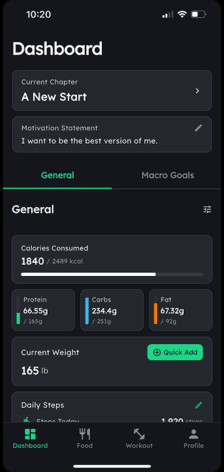
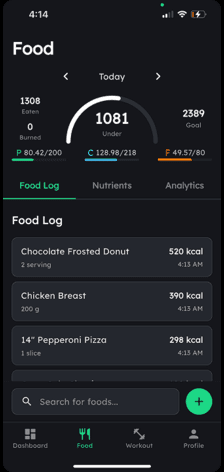
Track your food. Know you're hitting the right numbers to fuel muscle.
No commitment · Cancel anytime
The "Carbs Make You Fat" Myth Debunked
Let's be perfectly clear: carbohydrates do not make you fat. A calorie surplus makes you fat. You gain fat when you consistently consume more calories than your body burns, regardless of whether those calories come from carbs, fats, or protein.
You can eat 300 grams of carbs a day and lose fat if you're in a 500-calorie deficit. You can also eat only 30 grams of carbs a day and gain fat if you're in a 500-calorie surplus. The macronutrient is not the problem; the total energy balance is.
So why does this myth persist? It's because of water weight. For every one gram of glycogen your body stores, it also stores about 3-4 grams of water. When someone drastically cuts carbs, their glycogen stores deplete, and they flush out all that associated water. They might see the scale drop by 5-10 pounds in the first week and think they've discovered a fat loss secret.
This isn't fat loss. It's water loss.
The moment they eat carbs again, their body replenishes its glycogen stores, and the water weight comes right back. They see the scale jump up and incorrectly conclude, "See? Carbs made me gain fat overnight!" This cycle creates a fear of carbs and keeps people stuck in a low-energy, muscle-losing state.
Real fat loss is a slow process, about 0.5-1% of your body weight per week. Anything faster is almost certainly water or muscle. Don't let the scale's fluctuations from water weight trick you into abandoning the very nutrient you need to power your workouts.
How to Calculate Your Carbs for a Cut (Step-by-Step)
Instead of guessing, let's use simple math to determine exactly how many carbs you should eat. This process prioritizes muscle retention above all else. We calculate carbs last, after the two more critical macros are set.
Here's a clear example for a 180-pound (82 kg) person.
Step 1: Set Your Calorie Deficit
First, you need to be in a calorie deficit to lose fat. A moderate deficit of 300-500 calories below your maintenance level is the sweet spot. This is aggressive enough to drive fat loss but not so aggressive that it causes significant muscle loss. For our 180-pound person, let's say their maintenance is 2,700 calories. A 500-calorie deficit puts them at 2,200 calories per day.
Step 2: Set Your Protein Intake
This is the most important macronutrient for muscle retention. During a cut, your protein needs actually increase to prevent muscle breakdown. Aim for 1.8 to 2.2 grams of protein per kilogram of body weight (or about 0.8-1.0 grams per pound).
- Calculation: 82 kg x 2.0 g/kg = 164 grams of protein.
- Calories from Protein: 164 g x 4 calories/gram = 656 calories.
Step 3: Set Your Fat Intake
Dietary fat is essential for hormone production, including testosterone. Don't cut it too low. A good rule of thumb is to have fats make up 20-25% of your total daily calories.
- Calculation: 2,200 calories x 0.25 = 550 calories from fat.
- Grams of Fat: 550 calories / 9 calories/gram = ~61 grams of fat.
Step 4: Fill the Remainder with Carbs
Now for the easy part. Whatever calories you have left over in your budget become your carbohydrate allowance. This ensures you've met your protein and fat needs first.
- Remaining Calories: 2,200 (Total) - 656 (Protein) - 550 (Fat) = 994 calories.
- Grams of Carbs: 994 calories / 4 calories/gram = ~249 grams of carbs.
As you can see, this person can eat nearly 250 grams of carbs per day and still be in a fat-loss phase. This is more than enough to fuel intense workouts, maintain performance, and preserve muscle mass.
Your macros. Every day. On track.
No more guessing if you ate enough. Know your numbers every single day.
No commitment · Cancel anytime
Carb Timing and Types for Maximum Results
While your total daily intake of carbs is the most important factor, you can get a slight edge by being strategic about when you eat them and what types you choose.
Pre-Workout Carbs: The Most Important Meal
This is the most critical time to consume carbohydrates. Eating carbs before you train directly fuels your workout. It tops off your muscle glycogen stores, giving you the immediate energy needed to lift heavy and maintain intensity from your first set to your last.
Aim to consume 30-50 grams of easily digestible carbohydrates 60-90 minutes before your workout. This gives your body enough time to process them into usable energy without making you feel bloated or sluggish.
- Good choices: A large banana, two rice cakes with jam, a bowl of oatmeal, or a slice of toast.
Post-Workout Carbs: The Refueling Window
The idea of a 30-minute "anabolic window" post-workout has been largely exaggerated. However, consuming carbs after your workout is still a good practice. It helps begin the process of replenishing the glycogen you just burned, which aids in recovery and prepares you for your next training session.
Combine your post-workout carbs with a fast-digesting protein source (like a whey protein shake) to kickstart both muscle repair and glycogen replenishment. A 2:1 or 3:1 ratio of carbs to protein is a solid target. For example, 50 grams of carbs with 25 grams of protein.
Simple vs. Complex Carbs
Not all carbs are created equal. The difference lies in how quickly they are digested.
- Complex Carbs: These digest slowly and provide sustained energy. They should make up the majority of your carb intake. Examples include oats, brown rice, sweet potatoes, quinoa, and whole-wheat bread.
- Simple Carbs: These digest quickly and provide a rapid spike in energy. They are best used around your workout window (before or after) when you need that fast fuel. Examples include fruit, white rice, potatoes, and rice cakes.
Frequently Asked Questions
What's the minimum amount of carbs I need when cutting?
For most people, the functional minimum is around 100-150 grams per day. This provides enough glucose to fuel your brain and nervous system while also being sufficient to spare protein and support moderate-intensity training. Going below this number for extended periods often leads to performance drops and muscle loss.
Can I build muscle on a keto diet while cutting?
It is extremely difficult and inefficient. Building or maintaining muscle requires intense resistance training, which is an anaerobic activity fueled by glycogen. A ketogenic diet, by definition, eliminates the primary fuel source for this type of training. While possible for some, most people will see their strength and performance plummet, removing the stimulus needed to keep muscle.
Will eating carbs at night make me fat?
No. This is a persistent myth with no scientific basis. Your body doesn't have a clock that suddenly starts storing carbs as fat after 6 PM. Fat gain is determined by your total calorie intake over a 24-hour period, not by the timing of a single macronutrient. If late-night carbs fit within your daily calorie and macro targets, they will not cause fat gain.
What happens if my lifts start to decrease?
If your strength is consistently dropping week after week, it's a red flag that your cut is too aggressive. It's usually a sign that your calories or carbs are too low. The first step is to add 20-30 grams of carbs to your daily intake, preferably around your workout, and monitor your performance for the next 1-2 weeks. This small bump is often enough to restore performance.
Conclusion
Carbohydrates are not your enemy when cutting; they are your most valuable tool for performance. They fuel the hard training that convinces your body to burn fat while preserving muscle.
Stop fearing carbs. Instead, calculate your needs, eat them strategically to power your workouts, and watch as you get leaner and stronger at the same time.
All content and media on Mofilo is created and published for informational purposes only. It is not intended to be a substitute for professional medical advice, diagnosis, or treatment. Always seek the advice of your physician or other qualified health provider with any questions you may have regarding a medical condition, including but not limited to eating disorders, nutritional deficiencies, injuries, or any other health concerns. If you think you may have a medical emergency or are experiencing symptoms of any health condition, call your doctor or emergency services immediately.