Do I Still Need to Count Calories If I Workout a Lot

We hope you enjoy reading this blog post. Ready to upgrade your body? Try Mofilo Free
By Mofilo Team
Published
It’s one of the most frustrating feelings in fitness. You’re crushing workouts 4, 5, even 6 days a week. You leave the gym drenched in sweat, feeling accomplished. But when you look in the mirror or step on the scale, nothing changes. This guide explains why your hard work isn't translating to results and what to do about it.
Key Takeaways
- If your goal is fat loss, you still need to be in a calorie deficit, and counting is the most reliable way to ensure it.
- Fitness trackers and gym machines overestimate calorie burn by 27-93%, leading you to believe you have more calories to eat than you actually do.
- A vigorous 30-minute workout might burn 300-400 calories, an amount that can be instantly erased by a single sports drink or protein bar.
- Fat loss follows the 80/20 rule: 80% of your results come from your diet, while only 20% come from exercise.
- For sustainable fat loss of about 1 pound per week, aim for a consistent daily calorie deficit of 300-500 calories below your maintenance level.
- The primary role of workouts in fat loss is to build and preserve muscle, which boosts your metabolism, not to burn a massive number of calories.
The Hard Truth: Why Your Workouts Aren't Enough
If you're asking, "do I still need to count calories if I workout a lot," the answer for guaranteed fat loss is yes. It feels completely unfair. You're putting in the hours and the effort. You're doing everything you’re “supposed” to do. Yet, that stubborn layer of fat isn't budging. The reason is simple and non-negotiable: energy balance.
Fat loss only happens in a calorie deficit. This means you must consume fewer calories than your body burns over time. There are no exceptions to this rule. No workout plan, supplement, or diet hack can bypass it.
Think of your body like a bathtub. The water level is your body fat. The faucet pouring water in is the food you eat (calories in). The drain letting water out is your metabolism and activity (calories out). Your intense workouts are like using a small cup to scoop water out of the tub. It helps, but if the faucet is still running full blast, the water level will never go down.
Counting calories is how you gain control of the faucet. Exercise is just the helper. You cannot out-train a diet that provides too much energy. A 400-calorie workout followed by a 500-calorie “reward” smoothie puts you in a 100-calorie surplus. Do that a few times a week, and you’ll actually gain weight despite all your hard work.

Your hard work deserves results.
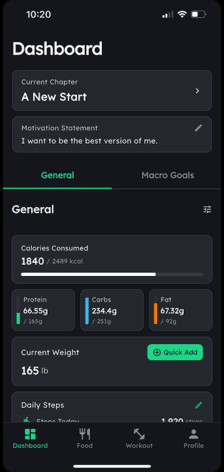
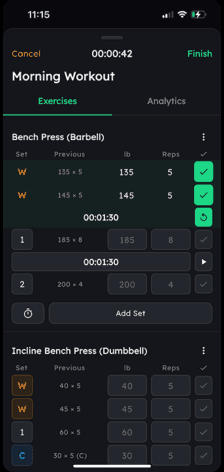
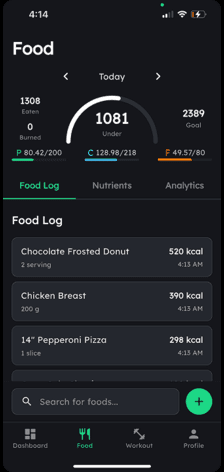
Track what you eat. See the scale finally move.
No commitment · Cancel anytime
The 'Calorie Burn' Illusion: Why We Overestimate and Overeat
Your smartwatch is lying to you. So is the treadmill, the elliptical, and the spin bike. One of the biggest reasons people fail to lose fat despite working out is that they dramatically overestimate how many calories they burn.
Fitness trackers are notoriously optimistic. They can overestimate your actual energy expenditure by anywhere from 27% to a staggering 93%. They use simple formulas based on heart rate and movement, but they don't know your individual metabolism, body composition, or efficiency.
Let’s put this into perspective:
- Your watch says: 600 calories burned in a 1-hour lifting session.
- The reality is: Closer to 250-350 calories.
- The elliptical says: 450 calories burned in 30 minutes.
- The reality is: Closer to 250-300 calories.
This creates a dangerous mental trap. You see a big number on your watch and think, “Great, I’ve earned a treat.” You justify eating back the calories you *think* you burned. But since the number was inflated, you don't just erase your deficit-you often push yourself into a calorie surplus.
This is called compensatory eating. It’s the voice in your head that says, “I was so good today, I deserve this pizza.” A single slice of pizza can have 300-400 calories, completely wiping out the deficit from your entire workout. A post-workout protein bar can be 250 calories. A grande latte can be 300 calories. It’s incredibly easy to eat back your workout-induced deficit in just five minutes.
The 80/20 Rule: How to Combine Diet and Exercise Correctly
For fat loss, the formula is 80% diet and 20% exercise. Your diet creates the calorie deficit. Your workouts protect your muscle and boost your metabolism while you're in that deficit. When you use them together correctly, the results are powerful. Here’s how to do it.
Step 1: Find Your Maintenance Calories
Before you can create a deficit, you need to know your starting point. Your maintenance calories are the number of calories you need to eat daily to keep your weight the same. You can use an online TDEE (Total Daily Energy Expenditure) calculator to get a solid estimate. Be honest about your activity level.
For example, a 35-year-old woman who is 5'5", weighs 160 pounds, and works out 3-4 times a week has an estimated maintenance of around 2,100 calories per day.
Step 2: Create a Sustainable Deficit
A common mistake is cutting calories too aggressively. This leads to hunger, low energy, and muscle loss. A sustainable deficit is between 300 and 500 calories below your maintenance.
Using our example, a 500-calorie deficit would mean setting a daily target of 1,600 calories (2,100 - 500). This deficit is large enough to produce roughly 1 pound of fat loss per week but small enough to be manageable without severe hunger or fatigue.
Step 3: Shift Your View of Exercise
Stop thinking of workouts as a way to “burn off” food. Start thinking of them as the tool you use to tell your body what to lose. When you're in a calorie deficit, your body needs to get energy from somewhere. It can burn fat, or it can burn muscle.
- Strength Training: This is your number one priority. Lifting weights (2-4 times per week) signals your body to hold onto precious muscle tissue. This ensures the weight you lose is primarily fat.
- Cardio: This is for heart health and a small calorie-burning bonus. Don't use it as your primary fat loss tool. 2-3 sessions of 20-30 minutes per week is plenty.
Step 4: Track Your Intake to Guarantee the Deficit
This is the final piece. You can’t manage what you don’t measure. Tracking your calories in an app is the only way to know for sure that you are hitting your 1,600-calorie target. It removes the guesswork and turns fat loss from a frustrating mystery into simple math.
Stop guessing if you're in a deficit.
Know your numbers every day. See the results you've earned.
No commitment · Cancel anytime
What to Do If You Refuse to Count Calories
I get it. For some people, counting every gram of food feels obsessive and unsustainable. While counting is the most direct and accurate path, it's not the only one. If you absolutely refuse to count, you can try these alternative methods. Just know they require extreme consistency and progress will be slower.
The Hand-Portion Method
Instead of counting calories, you use your hand to measure portions for each meal. This provides a consistent framework.
- 1 Palm of protein-dense food (chicken breast, fish, beef)
- 1 Fist of vegetables (broccoli, spinach, salad)
- 1 Cupped Hand of carb-dense food (rice, potatoes, pasta)
- 1 Thumb of fat-dense food (oils, butter, nuts)
For most men, this would be 2 portions of each per meal. For most women, 1 portion. Eat 3-4 meals like this per day. The downside? It's an estimate. If you hit a plateau, you have no precise data to adjust.
The Meal Template Method
This is the simplest approach. You design 3-4 meals that you know fit your calorie and macro goals, and you eat only those meals, every single day. For example:
- Breakfast: Same protein shake every day.
- Lunch: Same chicken, rice, and broccoli bowl every day.
- Dinner: Same salmon and asparagus every day.
This works because you've done the calorie counting once upfront. It's boring, but it's effective. The lack of variety removes variables and makes adherence easy. The trade-off is obvious: dietary monotony.
Ultimately, these methods are just proxies for calorie counting. They work by controlling portions and limiting food choices to indirectly create a deficit. If they stop working, your only real solution is to go back to tracking your intake to find out why.
Frequently Asked Questions
Should I eat back the calories I burn from exercise?
No. Your daily calorie target (your TDEE minus your deficit) already accounts for your general activity level. Eating back the calories your watch says you burned on top of that simply cancels out the deficit you need for fat loss.
How many calories does a typical weightlifting session burn?
Far fewer than most people think. A 60-minute strength training session for a 180-pound person burns approximately 250-400 calories. The primary benefit isn't the calories burned during the session, but the muscle built, which increases your metabolism long-term.
Can I just 'eat clean' to lose fat?
No. While 'clean' foods are nutrient-dense, they still contain calories. Healthy fats like avocados (240 calories), almonds (160 calories per ounce), and olive oil (120 calories per tablespoon) can quickly add up and push you into a calorie surplus.
Why do I feel so much hungrier when I work out more?
Exercise increases your appetite because your body is signaling its need for energy to repair and recover. This is a normal physiological response. This is also precisely why tracking calories is so important-it provides a guardrail against over-consuming in response to these powerful hunger cues.
Conclusion
Your hard work in the gym absolutely matters, but it's only half of the equation. You cannot out-exercise a diet that isn't aligned with your fat loss goals. Counting calories isn't a punishment; it's a short-term diagnostic tool that empowers you to finally see the results your effort deserves.
All content and media on Mofilo is created and published for informational purposes only. It is not intended to be a substitute for professional medical advice, diagnosis, or treatment. Always seek the advice of your physician or other qualified health provider with any questions you may have regarding a medical condition, including but not limited to eating disorders, nutritional deficiencies, injuries, or any other health concerns. If you think you may have a medical emergency or are experiencing symptoms of any health condition, call your doctor or emergency services immediately.